

A Customer 360 view sounds irresistible: one place where sales, marketing, service, finance and operations can see the same customer. But the phrase often hides a much harder question. What decisions will become better once the data is unified?
That question matters because Customer 360 is not a dashboard project. It is an identity, integration, governance and operating-model project that may culminate in dashboards, applications or automated workflows. For some businesses, the investment can remove costly blind spots. For others, a well-designed set of integrated reports is enough.
The right goal is not “a 360-degree view.” The right goal is to make specific customer decisions with enough context, consistency and speed to improve the outcome.
What Customer 360 actually means
At its simplest, Customer 360 means bringing relevant customer information from multiple systems into a coherent, governed view. The source systems might include CRM, billing, e-commerce, support, product usage, marketing, contracts, web analytics or operational applications.

The technical work usually has four layers:
- Integration. Data must be collected reliably from the systems that contain customer information.
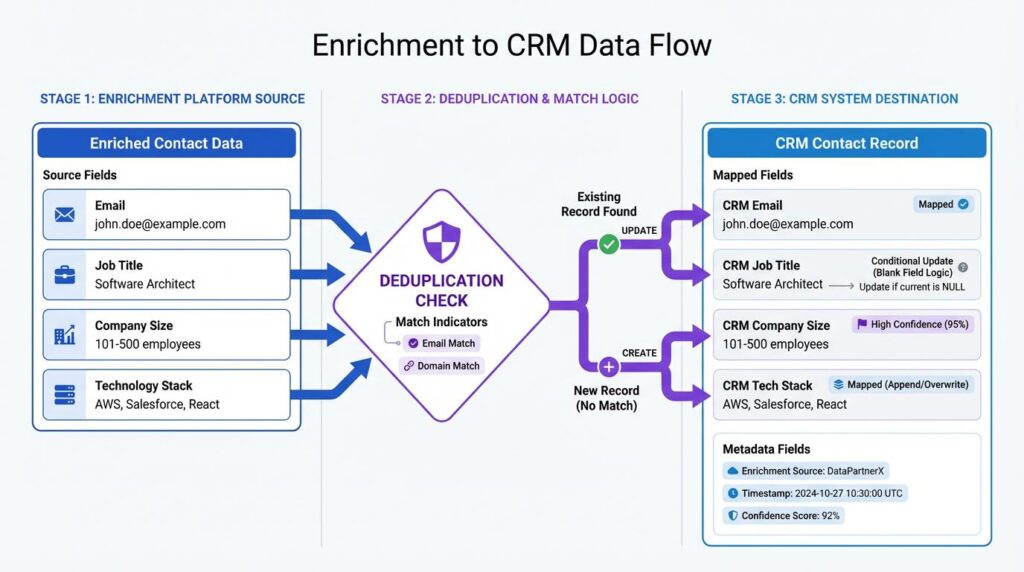
- Identity resolution. Records that represent the same customer must be matched without incorrectly merging different customers.
- Shared definitions. The business must agree on terms such as active customer, revenue, account owner, churn, lifetime value and open issue.
- Consumption. The unified data must reach the people or systems that can act on it, through BI, CRM, portals, APIs or automation.
Actiknow’s business intelligence services cover data-source and API integration, data modeling, dashboards and refresh mechanisms. Those capabilities are relevant because the value of Customer 360 depends less on the label and more on whether the underlying data can be integrated, modeled and delivered reliably.
When Customer 360 has a strong business case
1. The same customer exists in several important systems
A CRM may know the opportunity and account owner. Finance knows invoices and collections. Support knows unresolved cases. Product systems know usage. Marketing knows engagement. If executives regularly need several of those perspectives to make one decision, fragmentation is creating real decision friction.
The case becomes stronger when teams are already joining these datasets manually, exporting CSV files, maintaining lookup sheets or asking analysts to reconcile customer lists every week.
2. Identity fragmentation is causing operational mistakes
Customer 360 becomes valuable when the business cannot reliably answer, “Is this the same customer?”
A company may appear under a legal name in finance, a trading name in CRM and several domains in product data. A consumer may use different email addresses across channels. Parent and subsidiary accounts may need to be analyzed separately for one purpose and together for another.
Identity resolution should therefore be treated as a business rule, not just a fuzzy-matching exercise. The organization needs explicit rules for deterministic matches, probable matches, hierarchy, survivorship and manual exceptions.
3. Cross-functional decisions depend on customer context
A unified view is most valuable when it changes an action. Examples include:
- A sales team deciding whether to expand an account while finance sees overdue receivables.
- A customer-success team prioritizing outreach using product usage, contract value and support history.
- An executive team evaluating retention by combining billing, engagement and service signals.
- Operations identifying high-value customers affected by a service problem.
- Marketing suppressing or changing communications for customers already in an active sales or support journey.
These are not reasons to collect every possible customer attribute. They are reasons to integrate the minimum data required for a defined decision.

4. Customer reporting is repeatedly disputed
If sales, finance and service report different customer counts, revenue totals or retention rates, Customer 360 may provide the governed foundation for consistent reporting. But centralization alone does not solve disagreement. The organization still needs metric definitions, ownership, reconciliation and change control.
5. The unified view can be embedded into daily work
A technically impressive customer model that lives only in a warehouse has limited business value. The strongest cases have a clear consumption path: an account dashboard used before reviews, a CRM panel used by sales, a service view used during support interactions, or an automated trigger that routes an exception.
Actiknow’s custom solutions work includes web applications, integrations, databases and data lakes, and automation. That broader delivery model is relevant when Customer 360 needs to become part of an operational application rather than remain a reporting-only asset.
When Customer 360 probably does not pay off
1. The business cannot name the decisions it wants to improve
“Know our customers better” is not a sufficient use case. A useful business case should identify the user, decision, current limitation, desired data, action and measurable outcome.
If none of those can be stated clearly, start with discovery rather than a platform implementation.
2. Most customer information already lives in one system
If the CRM already contains the customer data required for sales and service decisions, duplicating it into a new architecture may create cost without changing outcomes. A smaller reporting model or a few targeted integrations may solve the problem.
3. Data quality is weak at the source
A Customer 360 layer can standardize and reconcile data, but it cannot magically repair missing ownership, inconsistent account hierarchies or unreliable transaction capture. Poor inputs may simply produce a more sophisticated version of the same uncertainty.
4. The organization wants every field before releasing anything
A “complete” customer record is usually an endless target. New systems, channels and attributes keep appearing. A better approach is to build around priority decisions and expand the model when a new use case justifies the work.
5. Nobody owns the resulting customer definition
Customer data crosses departmental boundaries. Without ownership, conflicts become technical tickets instead of business decisions. Someone must have authority over customer identity rules, metric definitions, access and exception handling.
A practical business-case framework
Before funding Customer 360, evaluate six dimensions.
Decision value
List the decisions the unified view will support. Rank them by frequency, financial significance, customer impact and current friction. A weekly account-prioritization decision affecting thousands of customers may justify more investment than an annual analysis used by a handful of people.
Fragmentation cost
Measure what fragmentation is costing today. Useful evidence includes analyst hours spent reconciling data, duplicated outreach, delayed account reviews, manual exports, inconsistent executive reports, unresolved ownership questions and errors caused by stale information.
Do not convert every hour saved into cash savings automatically. Time released is capacity unless headcount or external spend actually changes.
Identity complexity
Estimate how hard it is to establish a trustworthy customer key. Consider individual versus company identities, subsidiaries, householding, duplicate accounts, multiple emails, historical merges, acquisitions and source-system identifiers.
The more ambiguous the identity model, the more governance and exception management will be required.
Integration complexity
Inventory the source systems, APIs, files, refresh requirements, historical depth, deletion behavior and data volumes. Also ask who owns each source and what happens when its schema or API changes.
Privacy and access
A unified customer view can increase the sensitivity of the dataset because information that was previously separated becomes easier to combine. Access should follow business need. Decide which fields different roles can see, how sensitive attributes are handled, how consent and retention obligations apply, and how access is audited.
Adoption path
Define where the output will live. If the answer is “a dashboard,” identify who will use it, during which workflow, how often and what action follows. If the output feeds an operational system, define latency, failure handling and ownership.
Start with a Minimum Viable Customer 360
The safest approach is usually not to integrate everything. Start with one or two high-value decisions.
For example, an account-retention view might initially require only:
- CRM account and owner
- Contract or billing status
- Recent product or service activity
- Open support issues
- A small set of agreed customer health measures
That is enough to test whether the unified view changes behavior. Marketing history, web activity, survey data and other sources can be added later if they improve the decision.

A sensible implementation sequence is:
- Step 1: Define the business questions and actions.
- Step 2: Identify the minimum source data needed.
- Step 3: Establish customer identity and hierarchy rules.
- Step 4: Build ingestion and transformation with observable refreshes.
- Step 5: Reconcile customer counts and financial measures against source systems.
- Step 6: Apply role-based access and sensitive-data controls.
- Step 7: Deliver the view inside the user’s actual workflow.
- Step 8: Measure adoption, exceptions and decision outcomes before expanding scope.
What should executives measure after launch?
The success metrics should reflect the original problem. Depending on the use case, that may include:
- Percentage of customer records matched with sufficient confidence
- Number and age of unresolved identity exceptions
- Data freshness against agreed service levels
- Reconciliation differences versus source systems
- Reduction in manual data preparation
- Adoption by the intended users
- Time required to prepare account or customer reviews
- Reduction in duplicate or conflicting outreach
- Improvement in a specific commercial or service outcome, where attribution is defensible
Avoid claiming that Customer 360 “increased revenue” merely because revenue increased after implementation. The stronger evidence is whether the system changed a defined process or decision and whether the relevant operational metric improved.
Architecture choices: warehouse, CRM, CDP or custom application?
There is no universal Customer 360 architecture.
A cloud data warehouse is often appropriate when the main need is analytics across many sources, historical modeling and governed reporting. A CRM-centered approach can work when the primary users already operate in CRM and the required external data can be synchronized there. A customer data platform may make sense for marketing activation and identity use cases that fit its capabilities. A custom application can be appropriate when the unified view must support specialized workflows, permissions or interactions that packaged systems do not handle well.

Many organizations will use a combination. The important architectural principle is to separate the authoritative data and business rules from the interfaces that consume them. That reduces the risk that every dashboard or application develops its own version of the customer.
Questions to ask before approving a Customer 360 program
Executives should be able to answer these questions before major implementation begins:
- Which three decisions will become materially better?
- Which systems contain the minimum data required for those decisions?
- What is our definition of a customer, account and customer hierarchy?
- How will ambiguous matches be handled?
- Which metrics need one governed definition?
- What data should not be centralized or broadly exposed?
- How fresh does each source actually need to be?
- Where will users consume the unified view?
- Who owns data quality and identity exceptions?
- How will we prove that the new view is being used and creating value?
Frequently Asked Questions
What is Customer 360 analytics?
Customer 360 analytics combines relevant customer information from multiple business systems into a governed analytical view so teams can understand customers across functions. The important part is not collecting every attribute. It is establishing trustworthy identity, definitions and data that support specific decisions.
Do we need a data warehouse for Customer 360?
Not always. A warehouse is useful when analytics requires multiple sources, history, scalable transformation and governed reporting. If a small number of systems and straightforward operational use cases are involved, CRM integrations or another simpler architecture may be sufficient.
Is Customer 360 the same as a customer data platform?
No. Customer 360 describes an outcome or capability. A customer data platform is one technology category that can contribute to that outcome, particularly for customer identity and activation use cases. Warehouses, CRMs, BI platforms and custom applications can also form part of a Customer 360 architecture.
How long should a Customer 360 project take?
There is no responsible universal estimate. Scope depends on source-system count, identity complexity, history, data quality, security, integration methods and the consumption experience. A focused first use case is usually easier to validate than an enterprise-wide attempt to unify every customer field at once.
What is the biggest risk in a Customer 360 project?
A common strategic risk is building a technically unified dataset without a defined business decision or owner. Technical risks include incorrect identity merges, stale integrations, inconsistent metric definitions and excessive access to sensitive customer data.
How should Customer 360 ROI be calculated?
Start with the specific process or decision being improved. Quantify current reconciliation effort, delays, errors or missed actions where evidence exists. Then compare those costs and outcomes with implementation, platform and ongoing support costs. Treat released employee time as capacity unless it creates an actual cash saving.
A better way to think about Customer 360
Customer 360 is worthwhile when fragmentation prevents the business from making important customer decisions consistently. It is unnecessary when the same objective can be achieved with a smaller integration, a governed dataset or a better dashboard.
The strongest programs therefore begin with decisions, not data collection. They establish identity rules, shared definitions and access controls, integrate only what the first use cases require, and put the resulting insight into the workflow where action occurs.
If your organization is deciding whether a Customer 360 initiative requires integrated BI, a governed data foundation or a custom operational experience, contact Actiknow to discuss the architecture and scope before committing to a larger implementation.