

A dashboard works. The model produces a useful answer. A pipeline successfully moves data from source to warehouse. The proof of concept gets positive feedback. Then, six months later, the initiative is still not truly in production.
This is one of the most expensive failure modes in data and analytics because it often does not look like failure. The organization has something tangible to show. Stakeholders have seen a demo. Technical feasibility has been established. Yet the project cannot be trusted, supported, governed or adopted at the level required for day-to-day business use.
The gap exists because a proof of concept and a production system answer different questions.
A POC asks: Can this idea work?
Production asks: Can this keep working, securely and predictably, when real users depend on it, source systems change, data arrives late, people leave, permissions evolve and the business starts making decisions from the output?
For executives, the lesson is simple: production readiness is not the final technical step after a successful POC. It is a separate management problem that must be designed from the beginning.
What a Proof of Concept Actually Proves
A useful POC reduces uncertainty. It may demonstrate that Salesforce data can be combined with finance data, that a Snowflake or BigQuery warehouse can support the required reporting, that Power BI or Tableau can deliver the desired analysis, or that an integration can automate a previously manual workflow.
That is valuable. But a POC usually operates under unusually favorable conditions. The scope is narrow. The dataset may be controlled. A small group of technically engaged users participates. Exceptions are handled manually. Security may be simplified. Monitoring may consist of the project team watching the process. Documentation is often secondary because the people who built the solution are still in the room.
None of those assumptions survive production for long.
Organizations planning broader analytics programs should therefore distinguish technical feasibility from operational readiness. Actiknow’s business intelligence services cover data integration, reporting and analytics work, but regardless of implementation partner or platform, the production question remains the same: who will own the complete system once the project team stops treating it like an experiment?

The Seven Gaps That Commonly Appear After a Successful POC
1. Nobody Owns the Business Outcome
A data project may have a project sponsor without having an operational owner.
The sponsor approves budget and removes obstacles. The operational owner answers different questions: Who decides whether a metric definition changes? Who signs off when the dashboard differs from the finance report? Who decides whether a failed overnight load is important enough to escalate? Who is accountable for adoption after launch?
If those questions are unanswered, technology becomes the default owner of business semantics. That is rarely sustainable.
Before production, assign ownership at three levels: a business owner for the outcome, a data owner for critical definitions and quality, and a technical owner for the platform and pipelines. One person can hold more than one role in a smaller company, but the responsibilities must still be explicit.
2. The POC Was Built for the Happy Path
POCs demonstrate that a process works when inputs are valid. Production systems must survive invalid inputs.
Consider a CRM-to-warehouse pipeline. What happens when a field changes type, a record is deleted, an API rate limit is reached, credentials expire, the source sends duplicates, or yesterday’s file arrives today? A dashboard can be technically correct and still show the wrong business picture if the pipeline quietly misses a subset of data.
Production design therefore needs exception handling, retry logic, reconciliation and a defined response to partial failure. A successful job is not enough. The team should know whether the resulting data is complete and usable.

3. Security Was Deferred
Security shortcuts are understandable during experimentation, but they become dangerous when carried into production.
A POC may use one service account, broad database privileges or a dataset containing fields that every future user should not see. Production needs deliberate identity and access management, least-privilege permissions, environment separation, secrets management, auditability and rules for sensitive data.
The same applies to dashboards. Giving someone access to a report does not necessarily mean they should see every row behind it. Region, customer, department and role-specific restrictions should be designed and tested as part of the production model.
Actiknow publishes its security practices separately, which is a useful reminder that security should be treated as an operating discipline rather than a feature added to the last sprint.
4. Data Quality Is Assumed Instead of Measured
A POC team often knows its sample data intimately. Production introduces continuous change.
At minimum, important datasets should be monitored for freshness, completeness, unexpected volume changes, duplicates and schema changes. For financially or operationally important metrics, technical checks should be supplemented by business reconciliation.
For example, if a warehouse powers a revenue dashboard, the team should not only test whether the revenue column is non-null. It should reconcile agreed totals to the authoritative source within an accepted tolerance and explain known differences.
This distinction matters. Technical validity asks whether the data pipeline behaved as designed. Business validity asks whether the result can be trusted for the decision it supports.
5. The Architecture Cannot Be Operated Economically
POCs optimize for learning speed. Production must also optimize for repeatability and cost.
A query that is perfectly acceptable for five test users may become expensive or slow for 200. A full reload may work with six months of history but fail after three years. A dashboard that refreshes every 15 minutes may create cost without creating business value. A custom script may work reliably while its original developer watches it, but become difficult to support when no one knows its assumptions.
Before launch, test realistic data volumes, user concurrency and refresh schedules. Define expected operating costs and the conditions that could materially change them. Capacity planning does not require perfect forecasting, but it does require knowing what drives consumption.
6. There Is No Production Support Model
Every production data system eventually fails somewhere.
The important question is not whether failure occurs. It is whether the organization can detect, diagnose and recover from it without improvisation.
A basic support model should define monitoring, alert ownership, severity levels, escalation routes, recovery procedures and expected response times. It should also identify upstream and downstream dependencies. If an executive dashboard is stale because a CRM API failed, the person responding to the incident needs to know where the failure originated and which reports are affected.
Runbooks matter here. They do not need to document every theoretical problem. They should cover common failure modes, credential renewal, reruns, backfills, rollback and contact points.
7. Adoption Was Treated as Training
A project is not adopted merely because users attended a training session.
Real adoption requires confidence. Users need to know what each metric means, when the data was last updated, which system is authoritative, what to do when something looks wrong and which old report they should stop using.
Parallel reporting is sometimes necessary during transition, but it should have an expiry plan. If the legacy spreadsheet, old BI report and new dashboard all remain indefinitely available, users will choose whichever number supports their immediate argument. The organization then has more reporting, not better reporting.
A production launch should therefore include a migration plan for decisions, not just technology: which meetings will use the new output, which reports will be retired, who signs off on parity and how feedback will be handled.
A Practical Production-Readiness Gate
Executives do not need to review every engineering ticket. They do need a disciplined gate between POC approval and production approval.
Before a data product becomes business-critical, ask for evidence in six areas.
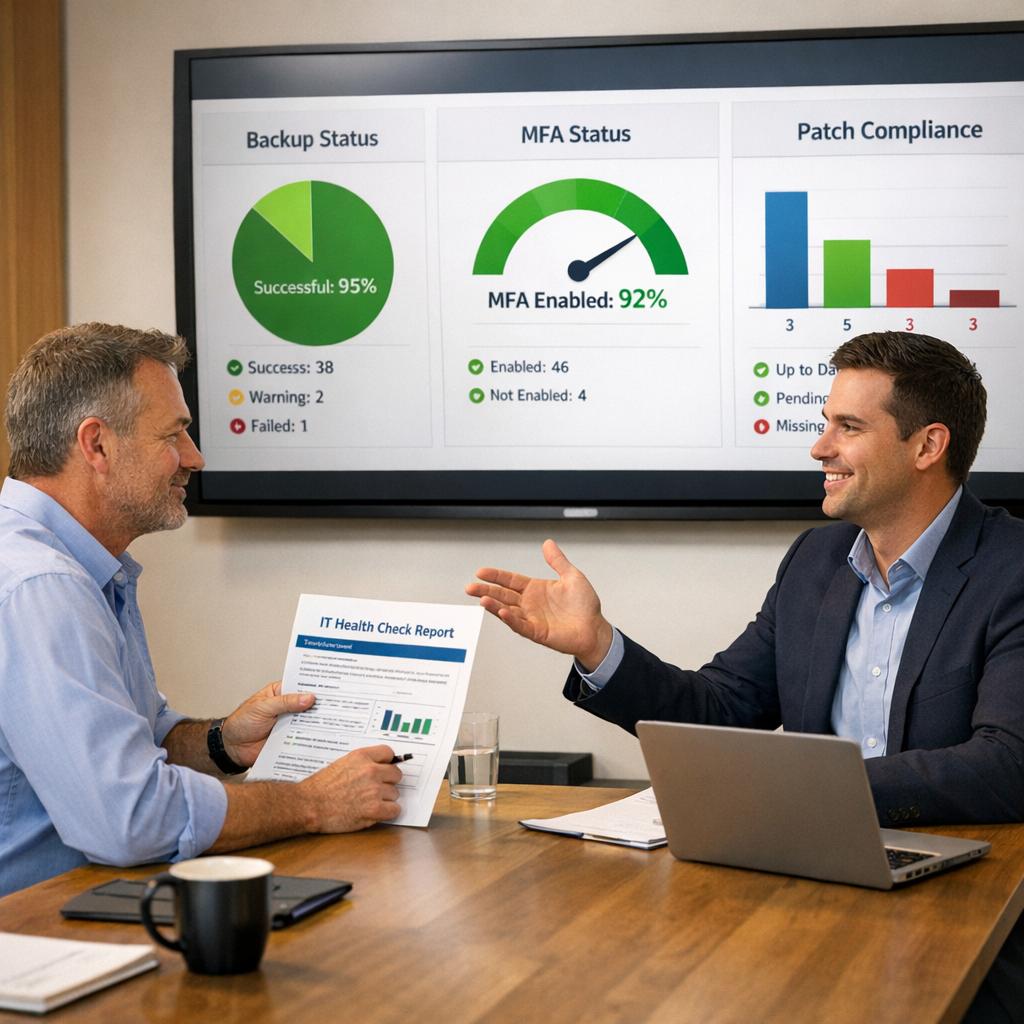
Business readiness: Is there a named owner? Are the decisions and users clear? Are KPI definitions approved?
Data readiness: Are sources authoritative? Are reconciliation rules documented? Are freshness and quality expectations measurable?
Technical readiness: Has the solution been tested at realistic scale? Are environments separated? Are deployment and rollback repeatable?
Security readiness: Are permissions least-privilege? Are sensitive fields identified? Are credentials and secrets handled appropriately? Is access auditable?
Operational readiness: Are monitoring, alerts, runbooks, escalation and support responsibilities in place?
Adoption readiness: Have users validated the output? Is there a plan to retire superseded reports or processes? Is success measured after launch?
A project does not need perfection in every category. It does need conscious acceptance of remaining risks. That is the difference between an unresolved gap and an executive decision.
How to Structure the Journey From POC to Production
Stage 1: Define the POC exit criteria before building it
Decide what uncertainty the POC is intended to remove. Avoid allowing a successful demo to become an accidental production architecture.
Stage 2: Conduct a production gap assessment
Once feasibility is proven, list what must change for scale, security, reliability, governance and support. Estimate this separately from the POC effort.
Agree on source systems, grain, business rules, exclusions, time zones and metric calculations. Document known differences from existing reports.
Stage 4: Engineer for failure
Add validation, retries, idempotent processing where appropriate, monitoring and recovery. Test late data, duplicates, deleted records and unavailable dependencies rather than only successful loads.
Stage 5: Validate with real users and real reconciliation
Run the new output against authoritative operational or financial sources. Investigate differences rather than forcing superficial parity. Sometimes the old report is wrong; sometimes the new one is. The goal is an explainable result.
Stage 6: Launch with explicit ownership
Publish support routes, refresh expectations, definitions and known limitations. Make ownership visible.
Stage 7: Measure the first 90 days
Track usage, incidents, data-quality failures, refresh reliability, support requests and whether the intended business decisions actually moved to the new system. Production is a continuing operating state, not a launch event.

What Executives Should Ask at the Next Steering Meeting
Instead of asking, “Is the dashboard finished?”, ask:
- Can we reconcile its most important numbers to the source?
- Who owns each critical metric?
- What happens when tonight’s data load fails?
- How quickly will we know that data is stale?
- Which users can see sensitive information?
- What will this cost at expected scale?
- Who supports it after the project team moves on?
- Which existing report or process will be retired?
- What evidence, 90 days after launch, will tell us this was successful?
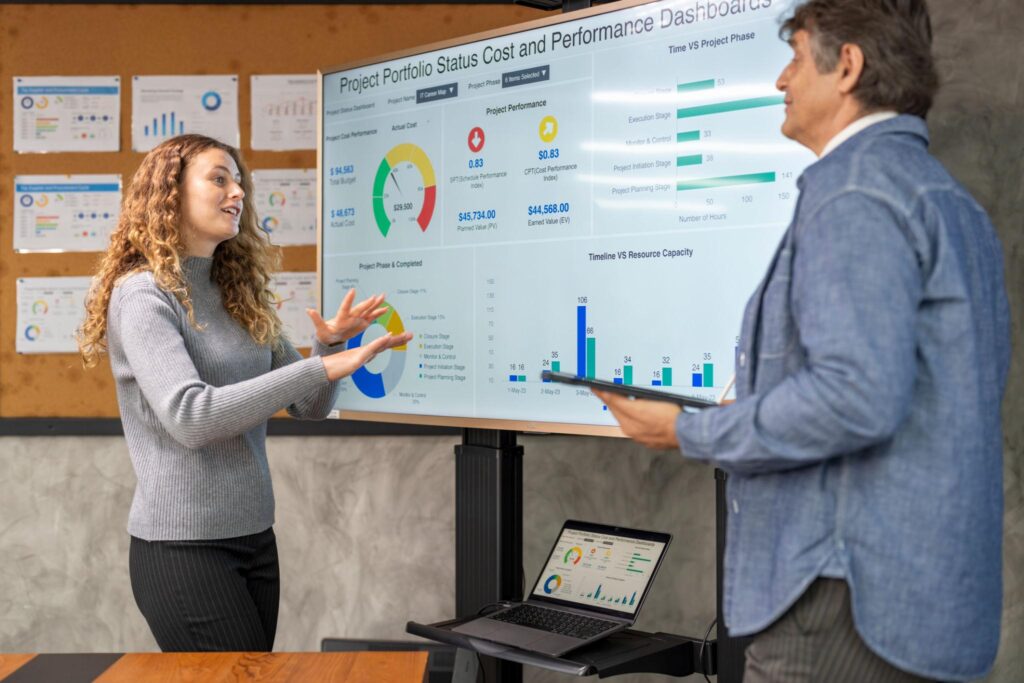
These questions expose production risk far earlier than a status report showing that development is 90 percent complete.
The Broader Lesson: Production Is an Operating Model
Organizations often frame the POC-to-production gap as technical debt. Some of it is. But the larger issue is operating-model debt.
A reliable analytics environment connects technology to ownership, controls and decision-making. A data warehouse without reconciliation is only centralized storage. A dashboard without agreed definitions is only a visualization. An automated pipeline without monitoring is only unattended code.
The companies that move data products into production consistently are not necessarily the ones with the most sophisticated stack. They are the ones that make ownership, quality, security, support and adoption part of the definition of “done.”
Frequently Asked Questions
Why do data analytics projects fail after a successful proof of concept?
Because a POC proves feasibility under limited conditions, while production requires reliability, security, scalability, governance, monitoring, support and sustained user adoption. Those requirements are often underestimated or deferred during experimentation.
Should a POC use production-grade architecture?
Not necessarily. Overengineering a POC can defeat its purpose. The important discipline is to document shortcuts and assumptions, then perform a formal production gap assessment rather than treating prototype components as production-ready by default.
How long should the transition from POC to production take?
There is no responsible universal duration. It depends on data sensitivity, number of sources, integration complexity, scale, regulatory requirements, quality of existing infrastructure and support expectations. A small internal dashboard and a customer-facing analytics product should not have the same production gate.
What is the most important production-readiness test for a BI project?
For decision-critical BI, reconciliation is one of the most important tests. Users need evidence that important metrics tie back to authoritative sources under agreed definitions. Technical pipeline tests alone cannot establish business trust.
Who should own a production data product?
Ownership is usually shared. A business owner should be accountable for the outcome and adoption, data owners should govern important definitions and quality, and technical owners should operate the platform and pipelines. The names and escalation paths should be explicit.
How do you know whether a data project is truly in production?
A useful test is whether the system can operate through routine change without depending on the original project team’s memory. It should have defined ownership, monitored data flows, controlled access, repeatable deployment and recovery, documented definitions, support processes and active users making the intended decisions from it.
Call to Action
If your analytics POC works but the path to production is unclear, Actiknow can help assess the gaps across data integration, BI implementation, custom engineering and operational readiness. Start with a focused conversation about what is already working, what must become production-grade, and what should remain deliberately simple. Contact Actiknow to discuss the next stage.