

A B2B SaaS platform may serve ten customers today and hundreds tomorrow. The database design selected early can determine how easily the product enforces customer boundaries, handles large accounts, restores deleted data and supports enterprise procurement requirements. Yet “one database per customer” is not automatically safer, and “one shared database” is not automatically cheaper once operational complexity is counted.
The useful question is not which pattern wins universally. It is which isolation boundary your customers need, which operations your team can reliably run, and how much variation between tenants the product must support.
What multi-tenancy actually means
A tenant is a customer organization or another explicitly defined isolation unit. Users may belong to multiple tenants, and one enterprise may have multiple workspaces. The application must resolve the active tenant from trusted authentication and authorization context, not accept a client-supplied tenant ID as sufficient proof of access. Database partitioning is one layer of a wider system: object storage, queues, caches, search indexes, analytics exports, logs and third-party integrations must enforce the same boundary.
Three common database patterns
All tenants use the same tables, such as orders(tenant_id, order_id, amount). The application and database must constrain every read, write, join, background job and administrative operation to the correct tenant. Composite keys and foreign keys that include tenant_id help prevent accidental cross-tenant references. In PostgreSQL, row-level security can provide defense in depth when policies, roles and bypass privileges are configured and tested correctly; it does not replace application authorization.
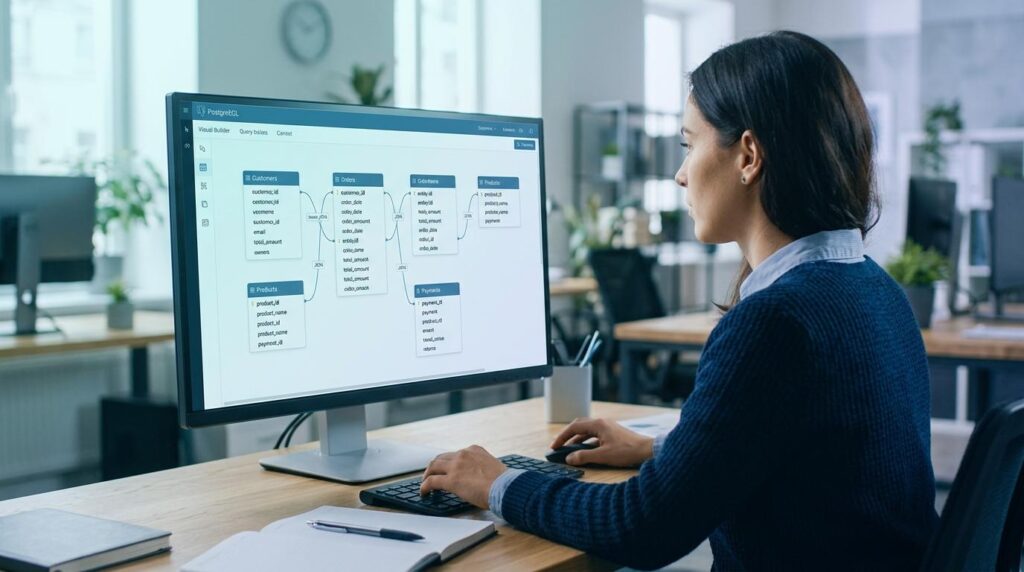
Strengths: low per-tenant provisioning overhead, simpler centralized schema migrations, efficient pooling and good economics for many small or moderately sized tenants. Weaknesses: mistakes in query scoping can expose other customers, noisy-neighbor workloads compete for resources, and single-tenant point-in-time recovery is difficult when all tenants share a physical database.
This is often a sensible default for an early B2B product with a consistent data model, predictable workloads and no contractual requirement for physical separation. It is not appropriate merely because developers promise to remember WHERE tenant_id = ? in every query.
2. Separate schemas within one database
Each tenant has its own namespace and tables, such as tenant_a.orders and tenant_b.orders, while sharing the database server and much of its operational infrastructure. This offers a clearer structural boundary and may accommodate limited schema variation. But database-level backups, compute, storage and administrator access can remain shared.
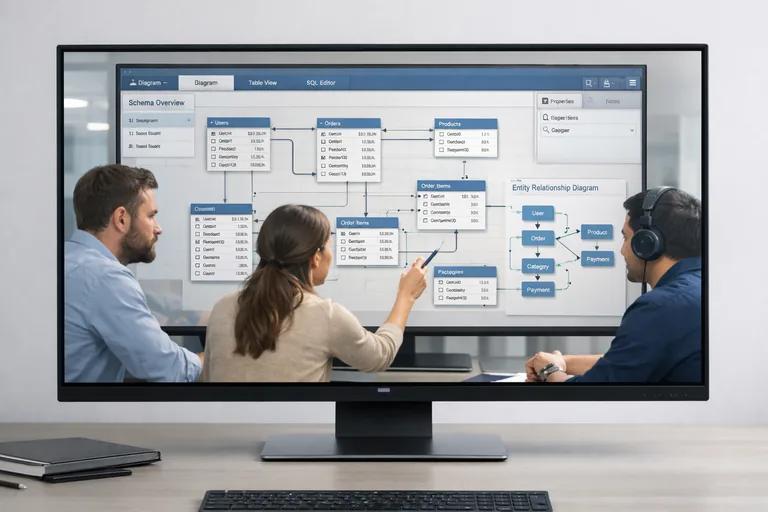
Strengths: reduced chance of accidentally joining ordinary tenant tables, easier targeted schema-level export, and more flexibility for customer-specific changes. Weaknesses: migration fan-out across hundreds of schemas, catalog growth, permission complexity, connection or search-path errors and uneven schema versions. The search path must never be built from unvalidated user input; permissions and identifier handling require care.
Schema-per-tenant is a middle ground, not the same as a separate database or independent encryption and recovery domain.
3. Separate database per tenant
Each customer has a distinct logical database, potentially on shared infrastructure or on its own server or cloud account. The distinction matters: separate databases on one server can still share CPU, storage and failure domains.
Strengths: clearer administrative boundaries, potentially easier tenant-level backup and restore, tailored resource sizing and a route to stricter residency or enterprise isolation. Weaknesses: provisioning, secrets, patching, schema migrations, monitoring, connection management, version drift and cost multiply with tenant count. Some managed services also impose quotas and minimum resource charges.
Dedicated databases can be justified for highly regulated customers, contractual isolation, very large workloads or customers who require independent restore and maintenance windows. They should be selected with a repeatable control plane, not through manual one-off database setup.

Decision matrix: what changes by architecture?
Isolation: shared tables depend heavily on correct policy and query enforcement; schemas offer namespace separation; databases offer stronger logical administration boundaries. None guarantees isolation if privileged credentials, caches or application services are shared incorrectly.
Cost: shared tables generally minimize fixed per-tenant overhead. Schemas add migration and metadata costs. Databases increase provisioning and operational overhead, although exact economics depend on cloud pricing, database engine, pooling and workload shape.
Customization: shared tables favor one canonical schema and feature flags. Schemas can accommodate some structural differences but increase drift. Databases allow independent upgrades yet risk creating a difficult-to-maintain product family.
Backups and restores: whole-database recovery is straightforward for shared infrastructure; recovering one tenant without affecting others may require logical export, replay or carefully engineered selective restoration. Separate databases can simplify tenant-scoped restore, subject to platform features and shared infrastructure.
Scaling: shared tables can work at considerable scale with indexing, partitioning and workload management. Schemas do not inherently provide independent compute. Separate databases enable more granular placement and capacity planning, at a higher operational cost.
Compliance: data location, access control, retention, auditability and contractual requirements must be evaluated explicitly. A separate schema or database is not by itself evidence of regulatory compliance.
A practical B2B example
Imagine a subscription platform serving 150 distributors. Most have five to twenty users and similar workflows; three enterprise customers run large nightly imports and request independent recovery. A plausible design is a shared-table core for standard customers, with a documented path to dedicated databases for enterprise tenants. This is an illustrative scenario, not a customer case study or a benchmark.
For the shared tier, use tenant-scoped unique constraints, policy-enforced access, rate limits, per-tenant job quotas and query-level observability. For dedicated tenants, automate database creation, migrations, credentials, backups and health checks. Keep a common application contract and versioned migration system so the two tiers do not become separate products.
Tenant-scoped identity: model organization membership, invitations, roles and switching between organizations. Test users who legitimately belong to two tenants, as well as revoked memberships and service accounts.
Data integrity: include tenant identity in composite keys where needed, enforce foreign-key relationships within a tenant and consider global identifiers that are opaque to external clients. Test cross-tenant references on every write path.
Authorization: use least-privilege credentials and database policies where supported. A single powerful application role that bypasses all tenant policies can undermine the design. Explicitly test exports, bulk updates, search, reports and support tooling.
Noisy neighbors: measure CPU, IO, lock contention, queue depth and expensive queries by tenant. Apply concurrency limits, quotas and workload isolation before assuming a database split is the only answer.
Operational lifecycle: design onboarding, trial expiration, suspension, deletion, data export, retention, restore and offboarding before the first customer requests them. An irreversible deletion workflow must account for backups and legal holds.
Data residency and contracts: identify what must remain in a region, including backups, telemetry and downstream processors. “Dedicated database” does not necessarily mean “dedicated region” or “dedicated encryption key.”
Analytics: cross-tenant operational dashboards must be separated from customer-facing reporting. Use controlled pipelines that preserve tenant identity, authorized aggregation and retention policies. The warehouse is another tenant boundary, not an exception.
Start with a tenant context derived from a validated session or service principal. Apply row-level security where the engine supports it and where the threat model warrants it. Ensure policies cover SELECT, INSERT, UPDATE and DELETE, and test ownership, privileged roles and connection-pool session resets. Make every unique constraint and relational reference tenant-aware where the business rule is tenant-specific. Add integration tests that deliberately request another tenant’s identifiers and verify denial, including indirect relationships.
Never rely only on a user-interface filter. Background workers, scheduled exports, admin consoles and integrations are frequent places where tenant context is lost. Logging should capture enough tenant and request correlation to investigate incidents without recording secrets or unnecessary personal information.

What a dedicated-database implementation needs
Provision through infrastructure automation. Maintain a tenant-to-database registry with audited changes, encrypted secrets and rotation. Run schema migrations in controlled batches, track failures and prevent a partial rollout from silently leaving incompatible versions. Centralize backup verification and restoration drills. Set capacity alerts per tenant and establish a safe process for moving tenants between clusters or regions.
Separate databases reduce some blast-radius risks, but a shared deployment pipeline or overprivileged support account can still affect every tenant. Isolation must be assessed end to end.
Can you change the model later?
Yes, but migration is a project, not a configuration switch. Moving a tenant from shared tables into its own database requires an inventory of every tenant-owned record, files, events, search documents, cached objects and external identifiers. Establish a consistent snapshot or change-data-capture process, reconcile row counts and business totals, test referential integrity, validate authorization, then switch traffic with a rollback plan.
A useful architecture principle is to keep tenant resolution, persistence access and provisioning behind stable interfaces. That makes later separation more feasible without forcing an expensive abstraction layer on day one. Actiknow’s custom web application development services describe discovery, application development, integrations and post-launch support, all relevant to planning such lifecycle changes.

A 30-day architecture assessment
Week 1
map customer segments, expected tenant counts, data volumes, workload peaks, security requirements and contractual promises. Document whether tenants need independent restore, encryption, location or deployment.
Week 2
build two small proofs of concept using representative data and realistic authorization tests. Benchmark the critical workloads, including bulk imports and cross-tenant access attempts, rather than only simple reads.
Week 3
test operational scenarios: onboarding 100 tenants, migrating schemas, restoring one customer, rotating credentials, suspending access and diagnosing a noisy neighbor. Estimate cloud and staffing costs with your own pricing inputs.
Week 4
select a default tier, specify exceptions and write an architecture decision record. Define objective triggers for moving a customer to a different isolation tier, such as sustained workload contention, contractual obligations or measured recovery requirements.
Questions executives should ask before approving the design
- Can we prove a customer cannot access another customer’s data through APIs, exports or background jobs?
- How long would a single-tenant restore take, and has it been rehearsed?
- What is the cost of adding the 500th tenant, including support and maintenance?
- Can a large tenant affect others during imports?
- Who can access production customer data, and is that access logged?
- Can a tenant be migrated or deleted without damaging another tenant’s records?
The right answer should be supported by tests, documented procedures and realistic cost assumptions, not a database architecture diagram alone. For teams also considering APIs, database setup and business workflow integration, Actiknow’s custom solutions overview outlines the adjacent engineering capabilities involved.
Frequently asked questions
Not inherently. It can be secure with rigorous authorization, database controls, tenant-aware data integrity and testing. Its risk is that isolation mistakes can have broader consequences.
2. Is schema-per-tenant the best compromise?
Sometimes. It offers namespace separation but can create considerable migration and permission overhead without providing independent compute or physical recovery.
3. Does database-per-tenant guarantee compliance?
No. Compliance also depends on access, encryption, residency, retention, monitoring, subprocessors and the specific legal or contractual standard.
4. Which model is cheapest?
Shared tables often have lower fixed overhead for many small tenants. Actual total cost must include database charges, engineering, monitoring, support, recovery and enterprise exceptions.
5. Can PostgreSQL row-level security replace application checks?
No. It can add strong database enforcement, but authentication, authorization, privileged-role handling and non-database resources still need controls.
6. How should tenant-specific custom fields be handled?
Prefer configuration, well-governed extension tables or typed metadata when possible. Avoid divergent schemas until a real customer requirement justifies them.
7. Can tenants have different release versions?
Dedicated deployments can support that more easily, but version drift raises support and security costs. Prefer a common release cadence unless contracts require otherwise.
8. What happens when one tenant needs a restore?
In shared tables, selective recovery can require a carefully engineered logical process. In dedicated databases, tenant-level restoration may be simpler, depending on the provider and architecture.
9. Should large customers always get separate databases?
No. Evaluate their actual workloads, isolation requirements and economics. Resource controls or workload separation may solve the problem without a full split.
10. What should a startup choose first?
For a consistent SaaS product with modest tenant workloads, shared tables plus robust isolation controls are often a pragmatic starting point. Validate exceptions before committing.
Conclusion: choose an operating model, not just a table layout
Multi-tenant database architecture is a business decision expressed in technical controls. Shared tables favor operational simplicity at scale, schemas trade some simplicity for structural separation, and dedicated databases buy flexibility at a measurable management cost. Define your tenant boundaries, recovery promises and support capacity first. Then test the design against real failure scenarios.
If you are evaluating a new SaaS platform or reworking an existing one, discuss the architecture and delivery requirements with Actiknow through its contact page. The goal should be a defensible design that your team can operate and evolve, not unnecessary complexity.