

A feature request has an obvious appeal: customers can see what the company is buying. Refactoring is harder to sell. The work may improve the structure of a critical application without adding a visible feature, and the engineering team may struggle to explain why it deserves budget now.
Yet the cost of postponing software maintenance can appear everywhere else in the business: slower releases, recurring incidents, manual workarounds, security exposure and opportunities the company cannot pursue.
The right decision is not “features or clean code.” It is which investment produces the greater business value at an acceptable level of risk.
The Decision Is About Business Capacity, Not Code Cleanliness
A CEO rarely needs to decide whether a codebase is elegant. The real question is whether the current software can continue to support revenue, service quality, security and change at an acceptable cost.
Refactoring means improving the internal structure of software without intentionally changing its externally observable behavior. It may involve separating tightly coupled modules, simplifying business logic, introducing automated tests, replacing fragile dependencies or clarifying interfaces. The immediate result may be invisible to customers. That does not make it unimportant.
But refactoring also competes with features customers can see. Funding it simply because engineers dislike old code is weak governance. Rejecting it because it does not create a new screen is equally weak. The right decision compares the measurable cost of keeping the system as it is with the cost and risk of improving it.
What Technical Debt Actually Means
Technical debt is the future cost created by a design or implementation decision that makes subsequent changes harder. Some debt is deliberate. A team may simplify an architecture to reach a launch deadline, knowing it will need to revisit the design. Other debt emerges because requirements change, systems grow or teams learn what the product really needs.
Technical debt is not synonymous with old software, an unpopular programming language or every bug. A stable ten-year-old application that is secure, maintainable and economical may be a better asset than a new system with poor architecture.
Martin Fowler’s technical debt quadrant distinguishes prudent from reckless and deliberate from inadvertent debt. The useful executive lesson is that debt can be an acceptable trade-off when its consequences are understood and repayment remains possible. The problem begins when its ongoing cost is neither measured nor owned.

Why the Feature Roadmap Eventually Slows Down
Technical debt often appears in business language before anyone names it. A change that used to take two days now takes two weeks. A small feature requires edits in six modules. Releases need a weekend outage. Every integration triggers regression bugs. The team avoids touching a critical component because nobody is confident what else it will break.
These symptoms are not proof that refactoring is the answer. Poor requirements, slow approvals, understaffing and external vendor dependencies can create similar delays. The first task is to identify which constraints actually arise from the software architecture and which arise from the delivery process.
If the same module repeatedly causes delays, incidents and rework across multiple features, it is a stronger candidate for investment than a component that merely looks untidy.
The Five Business Signals a CEO Should Watch
The most decision-relevant signals are incident frequency and severity, release speed, security or compliance exposure, recurring developer effort and commercial constraints.
Incidents matter when they interrupt customers, consume support capacity or threaten contractual service levels. Release speed matters when product changes consistently miss business windows. Security exposure matters when unsupported dependencies, weak authorization or unsafe data handling create unacceptable risk. Developer effort matters when teams spend a rising share of capacity fixing the same defects. Commercial constraints matter when the architecture blocks an enterprise requirement, integration or new pricing model.
No single metric tells the full story. A system can deploy quickly but fail frequently. Another can be stable but impossible to extend. Look at throughput, reliability and business impact together.
Measure Delivery Performance Without Gaming the Numbers
Engineering leaders can use deployment frequency, change lead time, change failure rate, failed-deployment recovery time and deployment rework rate to describe software delivery performance. DORA’s current guidance groups these into throughput and instability.
Do not set arbitrary universal targets or rank teams by deployment count alone. A regulated batch-processing application and a customer-facing SaaS product may have different release needs. Use trends within a comparable service and investigate changes in work mix, staffing and deployment process.
A useful board-level view shows whether important changes are reaching production predictably, whether those changes create disruption and whether the team is recovering quickly when something goes wrong. The purpose is to understand delivery capacity, not to reward more releases for their own sake.
Calculate the Cost of Doing Nothing
The cost of technical debt is often scattered across budgets. Support teams handle recurring incidents. Developers investigate fragile behavior. QA repeats manual regression testing. Product managers delay commitments. Customers wait for changes. Finance sees the costs separately and may never see the total.
Create an annual cost-of-inaction estimate using four categories: recurring engineering and support effort, operational incidents, commercial delays and risk exposure. Separate observed costs from scenarios and probabilities. Do not treat an uncertain future deal as guaranteed lost revenue.
A practical formula is: annual debt burden = recurring labor cost + incident cost + defensible delay cost + expected risk cost. Expected risk cost is probability multiplied by estimated impact, with the assumptions shown explicitly.
This model does not produce a perfect number. It makes the decision auditable and forces the team to explain what refactoring is expected to change.
Worked Example: A Hypothetical Refactoring Decision
Consider an illustrative B2B application with a fragile order-pricing module. The following numbers are hypothetical, not an Actiknow client result.
The team spends 18 engineer-hours per week on recurring pricing-related fixes and workarounds. At a fully loaded internal cost of $70 per hour, that is roughly $65,520 annually. The same module contributes to six significant incidents per year. If each incident costs an estimated $3,000 in response and service disruption, that adds $18,000. The directly estimated annual burden is therefore $83,520, before any opportunity cost.
A targeted refactor is estimated at $90,000, including tests, migration, rollout and contingency. Suppose it can reasonably eliminate 60% of the recurring effort and half the incident burden. The modeled annual benefit is $48,312. Simple payback would be about 22 months.
That may or may not justify the investment. The decision changes if the module also blocks a strategically important enterprise integration, or if the refactor is much riskier than estimated. Use a sensitivity range, not a single optimistic projection.
Separate Hard Savings From Capacity Released
An engineering team that spends fewer hours fixing defects does not automatically reduce payroll expense. The company may instead gain capacity for new features, support or modernization. Call that capacity released, not cash saved, unless staffing or external spend actually changes.
Similarly, faster releases create economic value only if the business can use the speed. A feature delivered four weeks earlier may improve revenue, retention or competitive position, but that benefit needs a credible commercial hypothesis.
For investment decisions, present cash savings, capacity released, avoided disruption and potential upside as separate lines. Mixing them into one inflated ROI number makes the business case less trustworthy.
When Refactoring Should Win Over New Features
Refactoring deserves priority when the current architecture is a bottleneck to several high-value initiatives, when recurring failures are material, when security or compliance gaps cannot be controlled safely through smaller fixes, or when future change costs are accelerating.
It can also be the better choice when a new feature would deepen the debt. If a pricing engine is already tightly coupled to invoicing and customer-specific exceptions, adding another pricing model without restructuring may increase both delivery cost and operational risk.
The strongest refactoring proposals identify specific future work they will make easier. “Improve code quality” is vague. “Reduce the effort required to add new customer pricing rules by isolating rule evaluation and adding contract tests” is a testable business claim.
When Features Should Still Win
Refactoring should not automatically displace revenue-critical work. If a small, well-understood feature has a near-term customer commitment and can be delivered safely without increasing systemic risk, shipping it may be rational.
Likewise, a low-change module with stable behavior and acceptable support cost may not warrant intervention. Technical debt has carrying costs, but those costs vary. Paying off cheap debt can be less valuable than funding a product capability customers actually need.
A sensible roadmap can reserve some capacity for targeted debt reduction while still delivering features. The allocation should respond to evidence, not an arbitrary permanent rule such as “always spend 20% on refactoring.”
Refactor, Replatform, Rebuild, Retire or Retain?
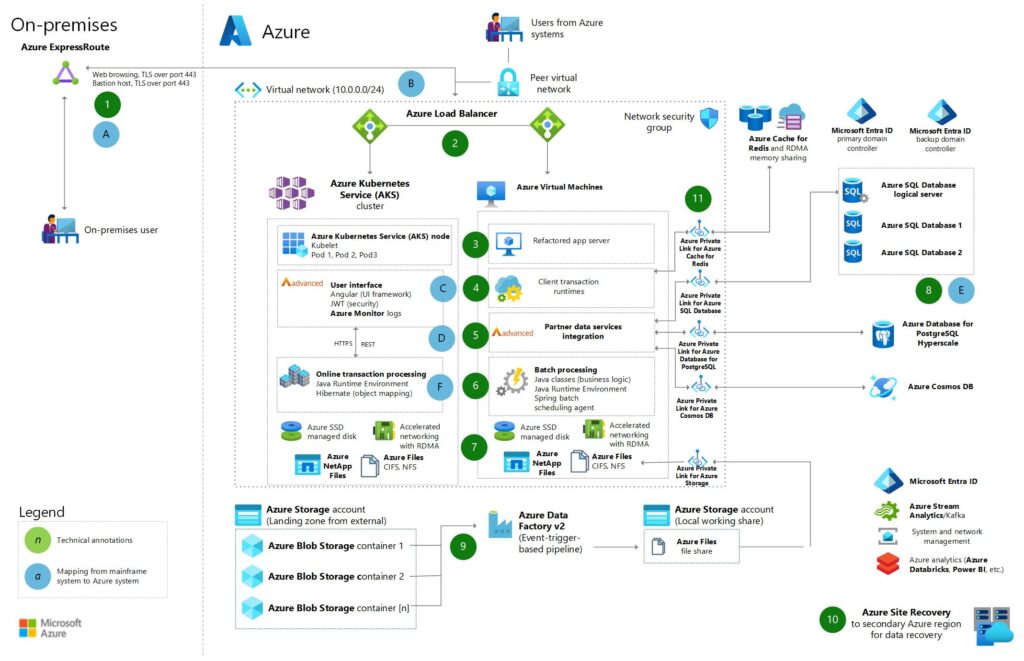
Not every modernization problem is a refactoring problem. Refactoring changes internal code structure while preserving behavior. Replatforming changes the runtime or infrastructure with limited application redesign. Rebuilding replaces substantial application functionality. Retiring removes a system that no longer creates enough value. Retaining deliberately postpones change.
Microsoft’s application modernization guidance describes these options alongside rehosting. The categories are useful because they prevent a false choice between doing nothing and rewriting everything.
For example, a slow deployment process might need CI/CD automation rather than application refactoring. An unsupported operating system may need replatforming. A brittle but valuable calculation engine may need targeted refactoring. A duplicate internal tool may be better retired. Choose the intervention that addresses the actual constraint.
Why Full Rewrites Often Carry Hidden Risk
A rewrite can be justified when the old design cannot support required functionality, security or scale at a reasonable cost. But it also risks discarding years of business rules that exist only in code, edge cases and user habits.
A new system may appear simpler because the old one contains accumulated exceptions. Those exceptions may represent real contractual, regulatory or operational requirements. Unless they are discovered, the replacement will recreate them late in the project.
A safer alternative is often incremental modernization: identify boundaries, add tests, extract one module, route selected traffic to the new implementation and compare outcomes. A full rewrite should have an explicit business case and migration plan, not simply a new technology preference.
Choose the Smallest Valuable Slice
Start with a module whose debt has a measurable effect and whose boundaries can be controlled. Good candidates include a fragile integration layer, a business-rule engine, a slow batch process or an authorization component.
Define what stays unchanged from the user’s perspective. Establish baseline tests, production behavior and performance expectations. Refactor behind stable interfaces, release in stages and monitor regressions.
Avoid an unbounded “clean up the codebase” initiative. A scoped investment should have a sponsor, budget, acceptance criteria and a date when the business can review whether the promised improvement occurred.
Technical Debt Is Often Concentrated, Not Evenly Distributed
One of the most useful exercises is to map incident tickets, change requests and developer effort to modules. The highest-cost components may be a small fraction of the system.
A heat map can combine change frequency, failure frequency, business criticality and complexity. A component that changes frequently and fails often deserves attention. A complex component that has not changed for years may be lower priority unless it presents security or continuity risk.
This approach avoids refactoring everything and focuses investment on the parts of the application that constrain business outcomes.
Do Not Ignore Security and Dependency Risk
Unsupported libraries, obsolete runtimes, weak access controls and unpatched components may require investment even when they have not yet caused an incident.
The business case is different from ordinary productivity improvements. Security risk depends on exposure, exploitability, data sensitivity, available mitigations and potential impact. A security team should assess the severity rather than relying on a developer’s general concern that the technology is old.
Some risks can be addressed through targeted upgrades, network controls or configuration. Others require architectural changes. Document residual risk and assign an accountable owner if remediation is deferred.
The Role of Automated Tests
Refactoring without reliable tests can be more dangerous than leaving code alone. Tests help establish that business behavior has not changed unexpectedly.
Prioritize tests around revenue-critical calculations, permissions, data transformations, external integrations and failure handling. Characterization tests can capture existing behavior when formal specifications are missing. Add integration tests where module boundaries are unclear.
Test coverage percentage alone is not enough. A codebase can have high coverage and still miss critical business rules. Ask which failure modes the tests protect against and whether they support safe incremental releases.
Modernization and Integrations
A custom application may be difficult to change because it is tightly coupled to ERP, CRM, payment systems or partner APIs. A seemingly minor change can then require coordinated releases across several systems.
Refactoring the integration layer can create stable contracts, isolate external failures, improve retries and make future integrations cheaper. The value comes from reducing the number of systems that must change together.
Actiknow’s custom solutions services cover web applications, API integrations and automation. For companies with multiple operational platforms, that integration context is important when deciding which technical debt to address first.
The CEO’s Decision Scorecard
Score each proposed investment on six dimensions: business impact, evidence of recurring cost, urgency of risk, strategic dependency, feasibility of a bounded solution and confidence in the expected benefit.
A simple 1-to-5 score can support discussion, but do not pretend the weighted total is a scientific answer. Add a short explanation and supporting evidence for every score.
For example, a high-risk authorization flaw may override the score because it creates a non-negotiable security obligation. A low-risk internal module may score well on developer frustration but poorly on business impact. The scorecard is a conversation aid, not an automatic approval engine.

Make the Business Case in One Page
A good refactoring request should answer: What business capability is constrained? What evidence shows the problem? What will change technically? What will remain unchanged for users? How much will it cost? What are the delivery and rollback risks? Which metrics will improve? When will the result be reviewed?
Include a do-nothing option and at least one smaller alternative. For example, compare a targeted module refactor with adding tests and fixing the worst defects, and with a full replacement.
The CEO should be able to understand the trade-off without reading a repository architecture diagram.
Funding Models That Avoid Endless Cleanup
There are three practical funding approaches. A dedicated project is appropriate for a bounded high-impact refactor. Capacity allocation within product delivery is useful for small recurring improvements. A modernization program is appropriate when several systems share architectural or infrastructure constraints.
Whichever model is used, require a product or business sponsor. The engineering team owns the implementation, but the business owns the priority.
Avoid approving an indefinite “technical debt sprint” with no outcome. Also avoid forcing every improvement into a feature ticket when the architecture genuinely needs concentrated work.
A 90-Day Assessment and Pilot
Days 1 to 15: identify the top business-critical applications, collect incident history, release delays, support effort, dependency risks and blocked product initiatives. Select one high-cost module.
Days 16 to 30: establish a baseline and map the smallest feasible intervention. Document the options, estimate effort and risk, and agree on acceptance criteria with product, engineering and operations.
Days 31 to 60: build tests, implement the bounded refactor, deploy behind a controlled rollout where feasible and instrument the relevant measures.
Days 61 to 90: compare change effort, incident patterns, release reliability and user impact against baseline. Record what improved, what did not and whether further investment is justified.
The exact timing will vary with system complexity. The value of this structure is disciplined learning before a larger commitment.
What Success Looks Like After the Investment
Success should be stated in operational and business terms before work begins. Possible measures include fewer repeat incidents, shorter lead time for changes in the affected module, reduced manual regression effort, faster onboarding of integrations and lower change failure rates.
Measure the targeted area, not just company-wide averages. If the refactor affects one pricing service, overall engineering deployment frequency may not move enough to reveal its value.
Also check for negative effects: performance regressions, new defects, unexpected infrastructure costs and disruption to customer commitments. A refactor that makes code cleaner but worsens the customer experience is not a success.
Governance: Who Decides and Who Is Accountable?
Engineering leadership should diagnose the technical constraint and present options. Product leadership should explain the roadmap implications. Finance should challenge the assumptions. Security and operations should assess exposure and continuity risk. The CEO or investment committee should decide when the trade-off is material.
After approval, one accountable owner should track cost, scope, risks and outcomes. A debt register can help, but it should not become a list of every code-quality complaint.
Treat major technical debt as part of portfolio governance. It competes with features because it affects the same scarce capital and delivery capacity.
Common Mistakes in Technical Debt Decisions
Mistake one: equating old code with bad code. Age alone is not evidence.
Mistake two: treating every refactor as a cost-saving project. Some investments mainly release capacity or reduce risk.
Mistake three: promising precise ROI from speculative revenue acceleration. Use scenarios and disclose uncertainty.
Mistake four: approving a rewrite before examining incremental options. Migration risk can dominate the project.
Mistake five: postponing all refactoring until a major incident occurs. By then the business may have lost flexibility.
Mistake six: letting engineers define success only in technical terms. Connect the work to service, speed, security or commercial outcomes.
Questions a CEO Should Ask the CTO
- Which three parts of our software create the most recurring cost or delay?
- What evidence shows that the architecture, rather than our process, causes the problem?
- Which product commitments will become easier after the proposed work?
- What is the smallest change that would remove the bottleneck?
- How will we prove existing behavior is preserved?
- What happens if we defer this work for another year?
- Could we solve the issue by replatforming, improving tests or changing an integration rather than refactoring?
- What metrics will we review after 60 or 90 days?
These questions make technical debt an investment conversation rather than a debate about programming preferences.
Frequently Asked Questions
What is the difference between technical debt and a software bug?
A bug is incorrect behavior. Technical debt is a design or implementation burden that makes future work harder. They can be related, but not every bug is technical debt.
Does refactoring add new features?
Usually no. Refactoring is intended to improve internal structure while preserving behavior. Its value may be faster, safer feature delivery later.
How much of the development budget should go to technical debt?
There is no universal percentage. Base the allocation on observed cost, risk, roadmap constraints and the availability of bounded improvements.
When is a full rewrite justified?
When targeted changes cannot reasonably address the required capabilities, risk or maintainability, and a staged replacement has a credible migration and validation plan.
How do we estimate ROI?
Separate recurring costs, incident costs, released capacity, risk reduction and uncertain commercial upside. Compare scenarios against full implementation and operating cost.
Should a CEO approve individual refactoring tickets?
Normally no. Engineering teams should manage routine improvements. Executive review is appropriate when investment is material or competes with major product commitments.
How can we tell if the refactor worked?
Compare agreed before-and-after metrics for the affected module, such as change lead time, repeat incidents, regression effort, deployment failures and support workload.
Conclusion: Fund the Constraint, Not the Cleanup
A CEO should fund refactoring when the existing software is measurably constraining the business and a bounded technical intervention offers a better risk-adjusted outcome than continuing to work around it.
The strongest proposals connect architecture to incidents, release speed, security, developer effort and commercial opportunity. They compare alternatives, make assumptions explicit and define what success will look like.
Actiknow’s custom web application development practice includes application development, migration, integration, testing and ongoing support. If an existing business-critical application is slowing delivery or accumulating risk, contact Actiknow to discuss a focused assessment of the system and its modernization options.