

Source systems change whether the data team is ready or not.
A SaaS API adds a field.
A database column changes type.
A vendor renames an attribute.
An enum gains a new value.
A nested JSON object becomes an array.
If the pipeline assumes the source schema will remain fixed, one of two things happens:
The pipeline fails.
Or worse, it keeps running and produces incorrect downstream data.
Schema drift needs an operating model.
What Schema Drift Means
Schema drift is an unexpected or evolving change in the structure or meaning of source data.
Common examples include:
- Columns added.
- Columns removed.
- Columns renamed.
- Data types changed.
- Nullability changed.
- Nested structures changed.
- Enum values added.
- Field semantics changed without structural change.
The last category is the hardest because the schema can look identical while the meaning changes.
Actiknow’s business intelligence and data engineering services include warehouse pipelines, SaaS integrations and governed transformation layers. Schema drift should be handled as a controlled change process, not as a recurring emergency.
Not All Schema Changes Are Bad
Some changes are harmless.
A new optional source column may not affect any downstream model.
Other changes are dangerous.
A string customer_id becoming numeric can break joins.
A status field changing from ACTIVE to Active can alter filters.
A removed field can invalidate executive metrics.
The architecture should classify changes by impact.
Create Compatibility Classes
A practical model:
1. Compatible
New nullable field that no consumer requires.
2. Review required
New enum value, type widening or new nested attribute.
3. Breaking
Removed field, renamed field, incompatible type or grain change.
4. Security-sensitive
New PII or confidential field.
Different classes need different automation.

Detect Drift at Ingestion
Do not wait for a dashboard to break.
Capture source schema metadata.
Compare each load with the expected schema.
Alert on:
- New fields.
- Missing fields.
- Type differences.
- Unexpected nested paths.
- Constraint changes.
If the source provides formal schema metadata, use it.
For schemaless APIs, infer cautiously and retain samples.
Preserve Raw Data
A raw ingestion layer provides recovery options.
Store source data with minimal transformation where practical.
Benefits include:
- Reprocessing after mapping changes.
- Investigating source behavior.
- Recovering fields that were initially ignored.
- Comparing before and after drift.
- Auditing vendor changes.
Raw does not mean unmanaged.
Apply retention, security and access controls.
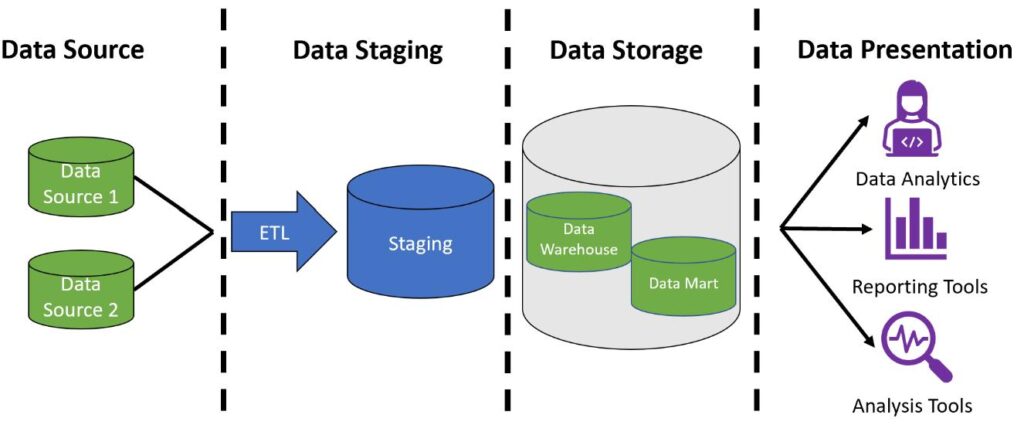
Separate Ingestion From Business Modeling
A resilient pattern is:
Source → raw/landing → standardized staging → business marts → semantic model
The raw layer can tolerate some additive changes.
The staging layer enforces expected contracts.
The business layer remains stable.
This prevents every source change from immediately propagating into dashboards.
Use Explicit Column Selection
SELECT * is convenient but risky in production transformations.
A newly added source column can unexpectedly propagate through models.
Explicitly select approved fields.
This creates a controlled boundary.
New source attributes can be reviewed before becoming part of the business contract.
Define Data Contracts
For important source-to-warehouse interfaces, document:
- Expected fields.
- Types.
- Required fields.
- Keys.
- Grain.
- Allowed values.
- Freshness.
- Owner.
- Change process.
A contract turns assumptions into something testable.
It also creates a conversation with source-system owners.
Contracts Do Not Prevent Change
A data contract is not a promise that a source will never change.
It defines how change should happen.
For example:
- Additive fields may be introduced without notice.
- Breaking changes require 30 days notice.
- Enum additions require notification.
- Critical identifier changes require joint testing.
The exact rules depend on organizational control over the producer.
Third-Party SaaS Needs Defensive Design
You cannot force a SaaS vendor to follow your internal contract.
For external sources:
- Monitor release notes.
- Detect schema automatically.
- Keep raw payloads.
- Avoid fragile assumptions.
- Build fallback behavior.
- Test critical endpoints regularly.
- Maintain vendor support contacts.
The contract is partly internal: how your pipeline reacts when the vendor changes.
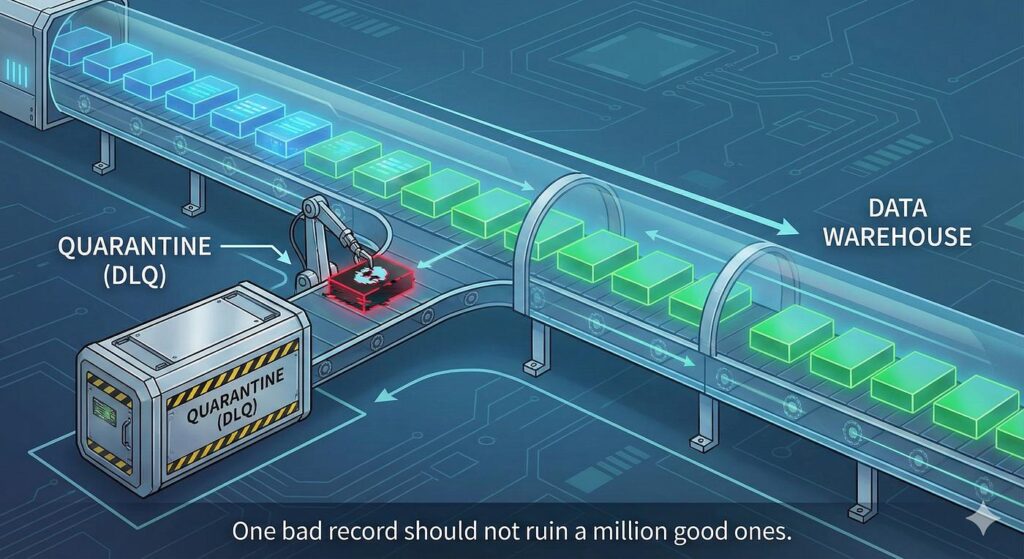
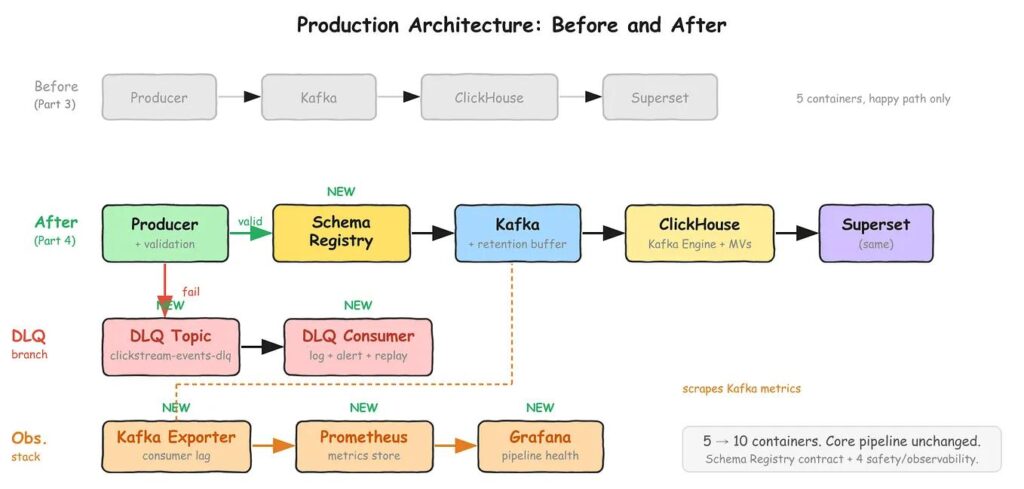
Quarantine Breaking Data
If a change makes records unsafe to process, quarantine them rather than silently coercing values.
For example:
Expected invoice_amount numeric.
Source sends “N/A”.
Do not automatically convert it to zero.
Store the rejected record with:
- Source identifier.
- Payload.
- Failure reason.
- Detected time.
- Pipeline version.
- Resolution status.
This protects downstream metrics while preserving evidence.
Fail Open or Fail Closed Deliberately
Different datasets need different behavior.
1. Fail closed
Stop publishing when a critical contract breaks.
Appropriate for financial or regulatory data.
2. Fail open
Continue processing compatible records while isolating failures.
Appropriate when partial availability is better than total outage.
Choose intentionally.
Do not let framework defaults decide business risk.
Handle Additive Columns Carefully
A new column is usually compatible.
But ask:
- Does it contain PII?
- Does automatic ingestion expose it broadly?
- Does it change storage cost?
- Will SELECT * propagate it?
- Should it be documented?
Security review can be more important than technical compatibility.
Handle Removed Columns as Breaking Changes
If a required field disappears:
- Detect it.
- Stop or quarantine affected processing.
- Identify downstream dependencies.
- Contact the source owner.
- Determine replacement.
- Backfill if necessary.
Do not silently replace a missing business field with null unless that is an approved rule.
Handle Renames Explicitly
A rename can look like one removed field plus one new field.
If detected, map it deliberately.
Maintain backward compatibility for downstream consumers where possible.
For example, staging can map new source field customer_segment_v2 into the existing warehouse contract while consumers migrate.
Handle Type Changes Carefully
Type changes can be subtle.
Examples:
- INTEGER → STRING.
- DATE → TIMESTAMP.
- FLOAT → NUMERIC.
- Boolean → enum.
Test whether conversion is lossless.
If not, create a new field or model version.
Do not cast until errors disappear without understanding what was lost.
Enum Drift Deserves Monitoring
Status fields frequently gain values.
A transformation may contain:
CASE WHEN status IN (‘A’,’B’) …
A new C value may fall into ELSE Unknown.
That can change KPIs.
Monitor unknown or unmapped enum values.
Require ownership for mapping them.
Semantic Drift Is Harder Than Schema Drift
Suppose source field revenue remains numeric, but the vendor changes it from gross revenue to net revenue.
No schema test catches this.
Mitigate semantic drift with:
- Business reconciliation.
- Release-note review.
- Metric anomaly detection.
- Source-owner communication.
- Control totals.
- Documentation.
Technical contracts need business validation.
Use Versioned Interfaces
For major breaking changes, create versions.
Examples:
- customer_staging_v1.
- customer_staging_v2.
- sales_api_v2.
Give downstream consumers time to migrate.
Do not force every dependent dashboard to change on the same deployment.
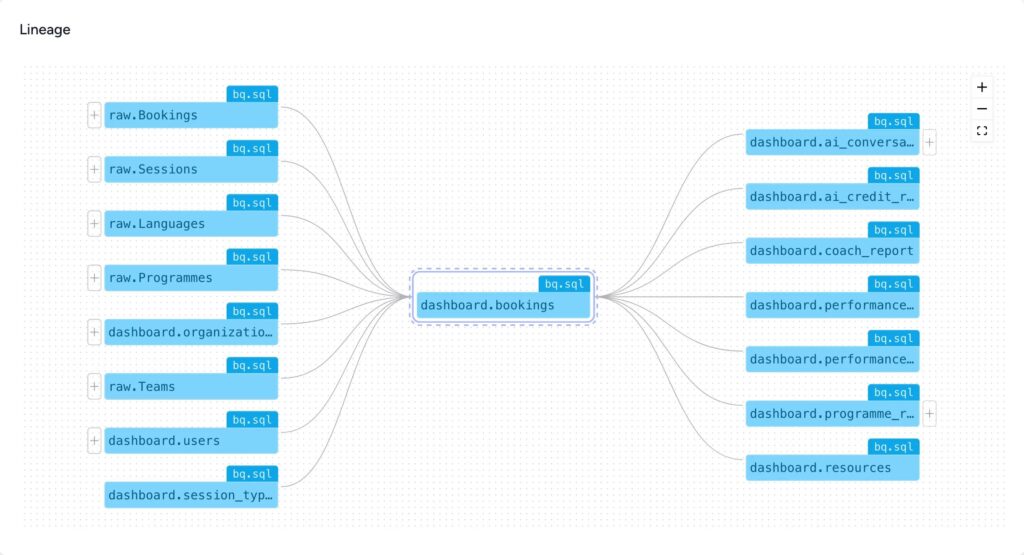
Maintain Lineage
When a field changes, know what depends on it.
Lineage should identify:
- Staging models.
- Marts.
- Metrics.
- Semantic models.
- Dashboards.
- Exports.
- APIs.
This makes impact analysis faster.
Without lineage, a small source change can become a company-wide search exercise.
Test Schema Changes Before Production
If you control the source application, include data consumers in release testing.
Use:
- Contract tests.
- Integration environments.
- Representative payloads.
- Migration scripts.
- Backward-compatibility tests.
- Downstream regression tests.
Schema change should be part of normal software change management.
Create Automated Contract Tests
Examples:
- Required columns exist.
- Types match.
- Primary key remains non-null.
- Expected grain remains unique.
- Allowed enum values known.
- Nested paths present.
- Sensitive columns classified.
Run tests during ingestion or transformation.
Make critical failures visible immediately.
Monitor Downstream Metrics After Changes
Even compatible changes can alter data.
After a source release, compare:
- Row counts.
- Null rates.
- Duplicates.
- Business totals.
- Distribution.
- Freshness.
- Important KPIs.
A post-change validation window catches semantic problems.
Define Ownership
Every critical source should have:
- Producer owner.
- Pipeline owner.
- Business owner.
- Downstream data owner.
- Support path.
When drift occurs, the incident should not begin with “Who owns this?”
Create a Schema Change Log
Record:
- Detected time.
- Source.
- Change.
- Compatibility class.
- Affected models.
- Decision.
- Owner.
- Deployment.
- Backfill required.
- Consumer notification.
This provides an audit trail and helps identify unstable sources.
Backfills Need a Plan
A schema change may require historical reprocessing.
For example, a corrected field mapping should apply to the previous six months.
Plan:
- Historical scope.
- Compute.
- Isolation.
- Validation.
- Dashboard impact.
- Release timing.
Do not run a large backfill directly into production tables without controlled validation.
Do Not Automatically Propagate Every Source Field
Modern connectors can make it easy to replicate hundreds of fields.
That does not mean every field belongs in curated marts.
Separate:
- Available source data.
- Approved warehouse data.
- Published business data.
This reduces the blast radius of source changes.
A Practical Schema Drift Workflow
- Detect the change.
- Classify compatibility.
- Identify downstream impact.
- Quarantine unsafe records if needed.
- Notify owners.
- Update mappings or contracts.
- Test with representative data.
- Backfill if required.
- Reconcile business outputs.
- Release downstream changes.
- Document the change.
Production Checklist
For every critical source, confirm:
- Expected schema is recorded.
- Drift detection is automated.
- Raw source data is retained appropriately.
- Critical fields use explicit selection.
- Breaking changes can stop or quarantine safely.
- New enum values are monitored.
- Type changes are tested.
- Lineage identifies downstream consumers.
- Owners are documented.
- Schema changes have a release process.
- Business metrics are reconciled after significant changes.
- Historical backfills are controlled.
Frequently Asked Questions
What is schema drift in a data pipeline?
It is a change in source data structure or meaning, such as added, removed or renamed fields, type changes, new enum values or altered nested structures.
Should pipelines automatically accept new columns?
Not always. Additive fields may be technically safe but can create security, cost or downstream-contract issues. Review before publishing them broadly.
What should happen when a required column disappears?
Treat it as a breaking change. Stop or quarantine unsafe processing, identify dependencies and agree a replacement or recovery plan.
How do you handle schema drift from SaaS APIs?
Use automated detection, raw payload retention, defensive parsing, explicit curated mappings, release-note monitoring and downstream reconciliation.
What is a data contract?
It is a documented and testable agreement about schema, grain, keys, quality, freshness, ownership and change expectations between producers and consumers.
Can schema tests catch every source change?
No. Semantic changes can leave the physical schema unchanged. Business reconciliation and anomaly monitoring are still required.
Should schema drift be handled in the raw layer or transformation layer?
Usually both. The raw layer preserves source data, while staging and curated layers enforce the business contract and isolate downstream consumers.
Conclusion
Schema drift is inevitable.
Broken dashboards are not.
Build a layered architecture that detects source changes early, preserves raw evidence, classifies compatibility and protects curated business models.
Use contracts where you control producers.
Use defensive design where you do not.
Quarantine unsafe changes rather than silently coercing them.
Then validate the business outputs after every material source change.
If changing SaaS APIs or operational databases are repeatedly breaking your warehouse, Actiknow can help design a more resilient ingestion, contract and transformation architecture. Discuss your data pipeline architecture with Actiknow.