
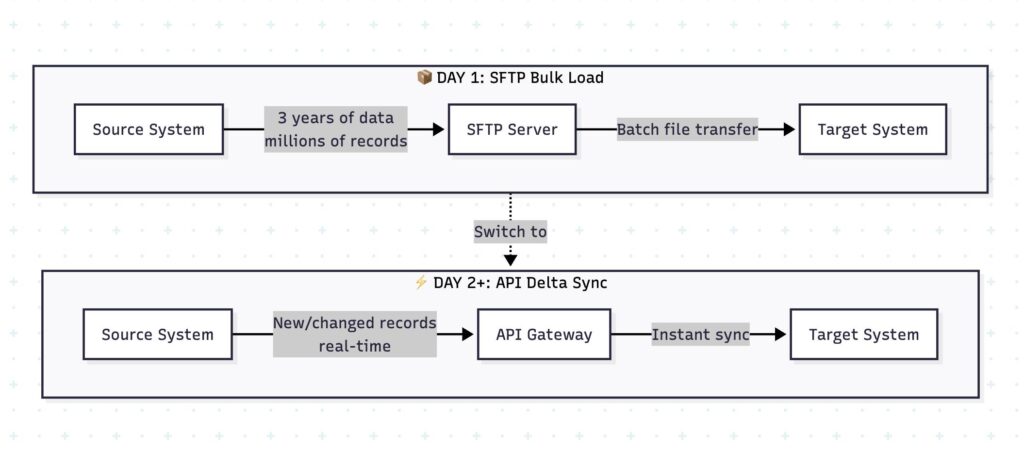
Companies often share analytical data by exporting CSV files, maintaining SFTP feeds or building custom APIs.
Those approaches are valid, but they create copies, schedules and operational work.
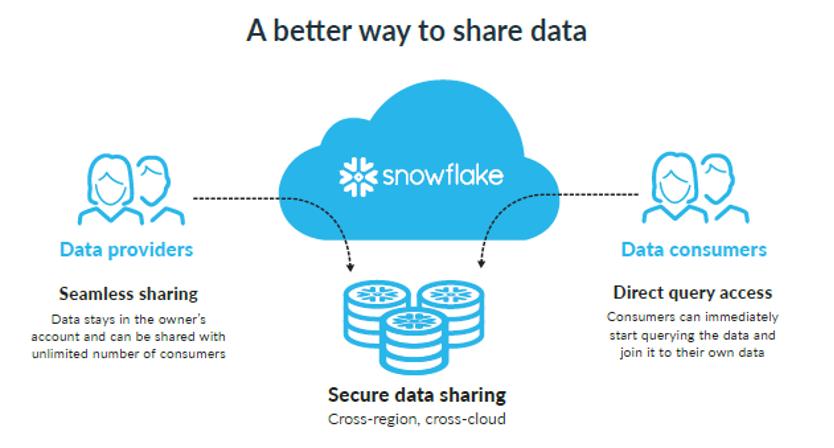
When both provider and consumer work in Snowflake, Secure Data Sharing offers a different model: the provider can expose selected database objects without copying the underlying data into a separate delivery pipeline.
That can be a major simplification, but only for the right use case.
What Snowflake Secure Data Sharing Does
Snowflake Secure Data Sharing allows providers to share selected database objects with consumers.
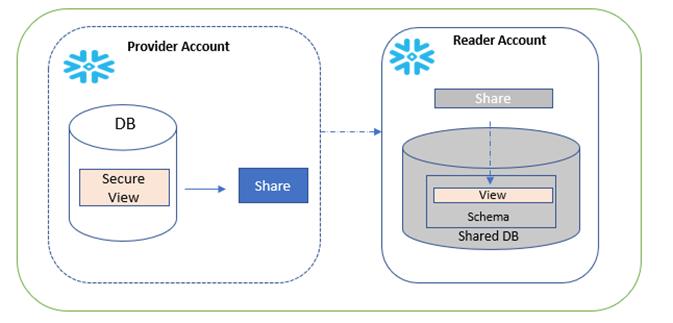
Snowflake’s current documentation states that shared objects are read-only for consumers and that the underlying data is not copied or transferred between accounts for standard sharing within the supported architecture.
Updates made by the provider become available to consumers without waiting for a nightly file export.
This makes sharing behave more like governed access to a data product than traditional data delivery.
Actiknow’s business intelligence and data engineering services include Snowflake warehouse architecture, integrations and reporting. The sharing method should be selected based on consumer needs, governance and operating cost rather than by defaulting to whichever integration pattern the organization already uses.
Why File Exports Become Expensive Operationally
A recurring file feed usually requires:
- Extraction.
- File generation.
- Naming conventions.
- Storage.
- Encryption.
- Transfer.
- Delivery monitoring.
- Consumer ingestion.
- Schema handling.
- Retry logic.
- Retention.
- Reconciliation.
- Support.
If data changes after a file is produced, the provider may need to resend or correct it.
Files are useful because they are portable, but portability comes with pipeline ownership.
Why APIs Become Expensive Operationally
APIs are appropriate when consumers need application-level access, commands, transactional workflows or tightly controlled request/response behavior.
But an analytics API requires engineering.
Teams must manage:
- Authentication.
- Endpoints.
- Pagination.
- Rate limits.
- Versioning.
- Infrastructure.
- Monitoring.
- Caching.
- Retries.
- Documentation.
- Support.
- Backward compatibility.
If the consumer simply needs governed analytical tables, building an API may be unnecessary.
Secure Sharing Removes the Delivery Copy
The strongest architectural benefit is that standard Secure Data Sharing does not require a separate consumer copy to be generated by the provider.
The provider controls the shared objects.
The consumer queries imported shared data through its Snowflake environment.
This can reduce:
- Duplicate storage.
- Batch delivery jobs.
- SFTP operations.
- File reconciliation.
- API infrastructure.
- Versioned extract processes.
It also reduces the delay between provider updates and consumer access.
Consumers Get Read-Only Access
Shared database objects are read-only to consumers.
That is an important boundary.
Secure sharing is designed for consumption, not collaborative transactional editing of the provider’s tables.
If the business process requires the recipient to update records and send them back, another integration mechanism is needed.
Use Secure Views to Control Exposure
Providers should not automatically share raw base tables.
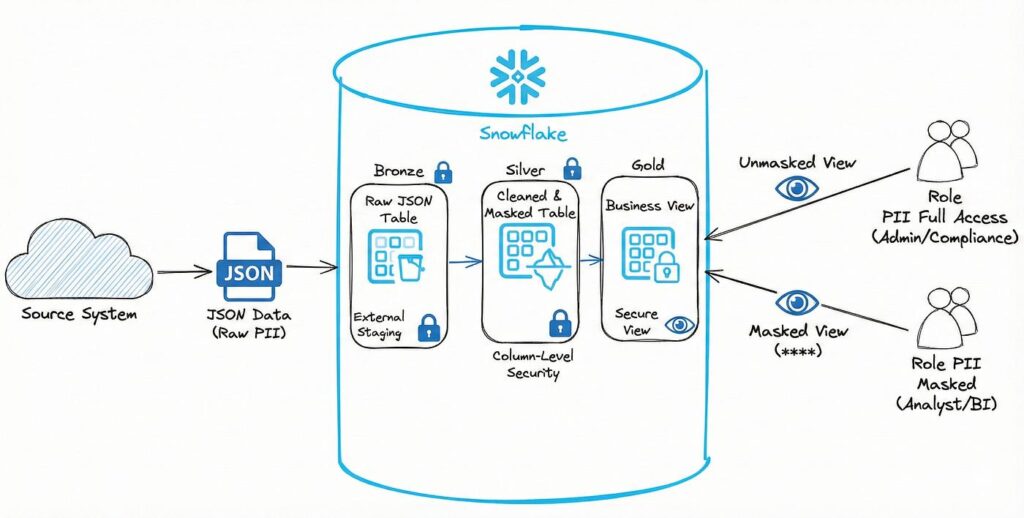
Snowflake recommends secure views or secure UDFs when sensitive data must be protected from consumer accounts.
A secure view can expose only the columns and rows the consumer is permitted to see.
This supports a curated data-product approach.
For example, a provider can keep internal identifiers and operational fields private while sharing approved customer, product and transaction attributes.
Treat the shared dataset as a product contract.
Define:
- Objects exposed.
- Column definitions.
- Business meaning.
- Refresh expectations.
- Historical retention.
- Allowed consumers.
- Sensitive fields.
- Change-management process.
- Deprecation policy.
- Support owner.
Sharing technology does not remove the need for data governance.
Avoid Exposing Internal Warehouse Complexity
Consumers should not need to understand the provider’s staging schemas and transformation internals.
Create a stable sharing layer.
For example:
Internal raw data → curated warehouse model → secure consumer view → share
This gives the provider freedom to change internal pipelines while maintaining the external contract.
Freshness Can Be a Major Advantage
With traditional files, freshness depends on export and ingestion schedules.
With Secure Data Sharing, consumers can access provider updates without a separate file-delivery cycle.
This can be valuable for:
- Partner analytics.
- Supplier reporting.
- Customer reporting.
- Shared reference data.
- Cross-company performance data.
- Internal multi-account analytics.
However, the source data is only as fresh as the provider’s own pipelines.
Secure sharing cannot make stale warehouse data current.
Governance Becomes Centralized
With files, once data is delivered, copies may spread into other systems.
With Snowflake sharing, the provider controls the share and can revoke access.
That does not eliminate all governance concerns, because consumers can potentially derive or export data according to their permissions and environment.
But it provides a more centralized access model than repeatedly distributing unmanaged files.
Cross-Region Sharing Needs Additional Architecture
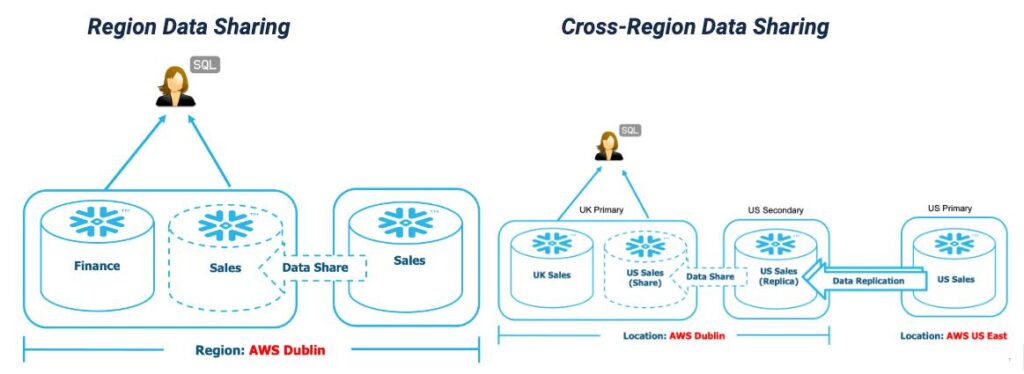
Standard sharing behavior depends on account and region configuration.
Snowflake supports sharing across regions and cloud platforms through replication and related fulfillment capabilities.
That means cross-region design may involve additional configuration, cost and data-residency considerations.
Before promising “zero-copy sharing” across every geography, confirm the actual provider and consumer regions and applicable Snowflake architecture.
Data Residency Still Matters
Cross-region or cross-country replication can have legal, regulatory and contractual implications.
Review:
- Data residency.
- Privacy obligations.
- Contract restrictions.
- Customer consent.
- Regional policies.
- Encryption requirements.
- Retention.
Do not treat data sharing as purely a database configuration decision.
Consumer Compute Is an Important Commercial Detail
In standard sharing, the consumer uses compute in its own Snowflake account to query shared data.
This can create a clean responsibility boundary.
The provider manages the data product.
The consumer manages its analytical compute.
That can be preferable to an API where the provider must operate infrastructure for every consumer request.
Reader or Managed Consumer Patterns May Be Needed
Not every recipient has its own Snowflake account.
Snowflake provides mechanisms for sharing with consumers that do not operate a full account, depending on the sharing model.
Evaluate this carefully because provider responsibilities and cost can change.
If most customers do not use Snowflake, a Snowflake-only delivery strategy may create friction.
Secure Sharing Is Strongest in Snowflake-to-Snowflake Relationships
Good candidates include:
- Two business units using separate Snowflake accounts.
- A company sharing curated data with a Snowflake-based customer.
- A data provider distributing analytical datasets.
- A parent company sharing common dimensions with subsidiaries.
- A partner ecosystem already standardized on Snowflake.
The closer the consumer’s natural workflow is to querying Snowflake, the stronger the fit.
Files Are Better When Portability Is the Priority
Use files when:
- Consumers use many different technologies.
- The dataset must be archived as a point-in-time delivery.
- A regulator or partner explicitly requires files.
- The recipient has no practical Snowflake access.
- The process is infrequent.
- Offline transfer is required.
- The format itself is part of the contract.
File integration is not obsolete.
It is simply a different operating model.
APIs Are Better for Application Workflows
Use an API when the consumer needs:
- Transactional commands.
- Record-by-record application access.
- Low-latency operational lookups.
- Create/update actions.
- Business logic enforced per request.
- Broad technology compatibility.
- Mobile or web application integration.
A governed analytical share should not be stretched into an operational API.
Secure Sharing Is Better for Analytical Consumption
Use Secure Data Sharing when:
- The consumer uses Snowflake.
- The data is analytical and read-only.
- The provider wants centralized governance.
- Fresh provider updates should be visible without recurring exports.
- Large datasets make repeated copying unattractive.
- The consumer needs SQL access.
- The provider can define a stable data contract.
Avoid Sharing Raw PII by Default
Create an explicit classification process.
Before sharing, identify:
- Personally identifiable information.
- Financial data.
- Contract-restricted data.
- Internal-only attributes.
- Security-sensitive fields.
- Consumer-specific rows.
Use secure views, masking and other appropriate Snowflake governance controls where required.
Share the minimum data necessary for the use case.
Plan Schema Changes
A shared table or view becomes an external dependency.
A column rename that seems harmless internally can break consumer queries.
Define change management.
For example:
- Additive changes may be allowed.
- Breaking changes require notice.
- Deprecated columns remain for a defined period.
- New versions use versioned views.
- Consumers receive release notes.
Treat shared schemas like APIs even though they are queried through SQL.
Monitor Consumer Experience
Providers should monitor the health of the underlying shared data product.
Track:
- Pipeline freshness.
- Schema changes.
- Data-quality failures.
- Access configuration.
- Consumer support issues.
- Large structural changes.
The consumer’s query performance also depends on its compute choices, but the provider still owns the quality of the shared dataset.
Define Support Boundaries
Clarify who owns:
- Data correctness.
- Data freshness.
- Consumer SQL.
- Consumer warehouse sizing.
- Access requests.
- Schema questions.
- Regional replication.
- Billing.
- Incident communication.
A technically simple share can still create support confusion without clear ownership.
Secure Sharing vs File Export
Secure sharing generally favors:
- Fresher access.
- Fewer provider delivery pipelines.
- No recurring standard data copy for same-region sharing.
- Central access control.
- SQL-native consumption.
File export generally favors:
- Technology independence.
- Point-in-time artifacts.
- Offline use.
- Simple one-off exchange.
- External archival requirements.
Secure Sharing vs API
Secure sharing generally favors:
- Bulk analytical access.
- SQL exploration.
- Large datasets.
- Consumer-controlled compute.
- Warehouse-native workflows.
API generally favors:
- Operational applications.
- Transactional interactions.
- Cross-platform access.
- Fine-grained request logic.
- Write operations.
- Controlled service behavior.
A Decision Checklist
Ask:
- Does the consumer already use Snowflake?
- Is the use case analytical or transactional?
- Is read-only access sufficient?
- How fresh must the data be?
- Is a point-in-time file required?
- Must the consumer use a non-Snowflake platform?
- Are cross-region or residency constraints involved?
- Which columns and rows may be exposed?
- Can we provide a stable curated schema?
- Who pays for query compute?
- How will schema changes be communicated?
- What happens when access must be revoked?
- How will consumers report data-quality issues?

Frequently Asked Questions
Does Snowflake Secure Data Sharing copy the data?
For standard sharing, Snowflake describes the model as sharing without copying or transferring the underlying data between provider and consumer accounts. Cross-region scenarios can require replication or fulfillment architecture.
No. Shared database objects are read-only to consumers.
Is Secure Data Sharing an API replacement?
Only for some analytical use cases. APIs remain appropriate for transactional behavior, writes, broad platform compatibility and application-specific request logic.
Yes. Curated secure views can be used to expose approved subsets rather than sharing raw tables.
What if the consumer does not use Snowflake?
Files, APIs or an appropriate Snowflake consumer-account model may be better depending on the use case. Do not force a warehouse-specific solution onto consumers who cannot use it effectively.
Is Snowflake sharing real time?
Provider updates can become available without a separate export pipeline, but end-to-end freshness still depends on the provider’s upstream ingestion and transformation processes.
Can access be revoked?
Yes. Providers control shares and consumer access. Revocation should still be part of a documented offboarding process.
Conclusion
Snowflake Secure Data Sharing is most compelling when the problem is governed analytical access between Snowflake environments.
It can remove recurring file generation, reduce unnecessary data copies and avoid building an API whose only purpose is to expose analytical tables.
But it is not a universal integration mechanism.
Use files when portability or point-in-time delivery matters. Use APIs for operational and transactional workflows. Use Secure Data Sharing when consumers need controlled, read-only, SQL-native access to current analytical data.
If you are deciding how to distribute warehouse data to customers, partners or business units, Actiknow can help design the sharing layer, governance model and downstream reporting architecture. Discuss your Snowflake data-sharing requirements with Actiknow.