

Change data capture versus batch is a business decision disguised as a technical one
When teams modernize a data platform, “real time” can quickly become a requirement.
Sales wants current pipeline. Operations wants live inventory. Finance wants faster revenue reporting. Customer teams want product usage immediately. Engineering then faces an architectural choice: continuously capture changes from source systems, or periodically extract data in batches.
Change data capture, commonly called CDC, can reduce latency dramatically. Batch synchronization is usually simpler to operate. Neither is universally better.
The right choice depends on how quickly the business needs data, how much load the source can tolerate, how reliably changes can be detected, what recovery looks like after failure, and whether the additional operational complexity creates measurable value.
Actiknow’s data engineering services cover data integration, ETL and ELT, data warehouses, cloud migration and ongoing data operations. These are the layers where refresh strategy matters because latency is created across the entire path, not only at the dashboard.
What is batch synchronization?
Batch synchronization moves data on a schedule.
A pipeline might extract all new and changed CRM records every hour, copy the previous day’s transactions overnight, or rebuild a reporting table each morning.
Batch logic commonly uses:
- full-table extraction;
- modified timestamps;
- incremental IDs;
- date partitions;
- scheduled API requests;
- file drops;
- periodic snapshots.
The defining characteristic is that changes are collected and processed in groups rather than propagated continuously as they occur.
Batch does not necessarily mean “once a day.” A pipeline running every five or ten minutes is still fundamentally batch-oriented if it queries for a window of changes on each run.

What is change data capture?
CDC detects individual inserts, updates and deletes in a source system and makes those changes available downstream.
Depending on the source and technology, CDC may use:
- database transaction logs;
- replication logs;
- change streams;
- event streams;
- source-native change tables;
- application events.
Instead of repeatedly asking a database which rows changed, a CDC process consumes a sequence of changes.
This can support much lower latency and reduce repeated source scanning, but it introduces its own requirements around ordering, offsets, replay, schema changes and downstream processing.

The key question: how fresh does the business actually need the data?
Before choosing an architecture, define the decision latency.
“Real time” is not a measurable requirement.
Ask how stale the data can be before somebody makes a worse decision.
Examples:
A fraud or operational alert may need seconds or minutes.
Inventory availability for ecommerce may need low latency.
A sales manager reviewing pipeline during the day may be satisfied with updates every 15 or 30 minutes.
An executive dashboard reviewed each morning may be perfectly served by an overnight batch.
Monthly financial reporting gains almost nothing from sub-minute replication if the accounting process itself closes on a slower cycle.
Write a freshness service level for each important dataset.
Once the business says “this data must be available within 15 minutes,” engineering can evaluate architectures against a real target.

1. Compare source-system load
Batch extraction can create source load because each run must query data.
A full-table extraction can be expensive as datasets grow.
Incremental batch reduces that load by filtering on timestamps, IDs or partitions, but it still requires queries and may need indexes to remain efficient.
CDC based on database logs can reduce the need to repeatedly scan operational tables. That can be a major advantage for high-volume transactional databases.
However, CDC is not free. Source logging, replication slots, retention, connector processes and network movement all have operational implications.
For API-based SaaS applications, traditional log-based CDC may not be available at all. The practical choice may be incremental polling, webhooks or vendor-provided change endpoints.
The architecture must follow the source’s actual capabilities.
2. Understand how deletes are captured
Deletes are one of the most overlooked differences between refresh strategies.
Suppose a source record disappears.
An incremental batch based only on “last modified timestamp” may never know that the record was deleted.
Possible approaches include:
- soft-delete flags;
- source audit tables;
- periodic full reconciliation;
- tombstone records;
- CDC delete events;
- source-specific deleted-record APIs.
For analytical reporting, ignoring deletes can create persistent discrepancies.
Before selecting a sync method, document how inserts, updates and deletes are detected for every material source.
3. Compare recovery after failure
Low latency is useful only if the system can recover safely.
With batch processing, recovery can be relatively intuitive.
If the 2:00 AM job fails, rerun the batch or reload the affected partition.
With CDC, the system usually needs to maintain a position in the change stream. Recovery may involve replaying events from a known offset or log sequence number.
That creates additional questions:
- How long are source logs retained?
- What happens if the consumer is offline beyond the retention window?
- Can events be replayed?
- Are downstream operations idempotent?
- How are duplicates handled?
- How is ordering preserved where it matters?
- What happens if the target is unavailable?
A CDC architecture needs a documented recovery procedure, not just a streaming connector.

4. Design for duplicates and idempotency
Distributed data movement can produce duplicate delivery.
A connector may retry after a timeout without knowing whether the target committed the previous write. A replay may intentionally send previously processed changes again.
Downstream processing should therefore be idempotent where practical: processing the same change twice should not corrupt the final state.
Common techniques include:
- stable business keys;
- source change identifiers;
- merge or upsert operations;
- deduplication windows;
- sequence numbers;
- version timestamps.
Batch pipelines need similar discipline, particularly when rerunning windows.
The goal is not to guarantee that a transport layer never duplicates a message. The goal is to ensure that duplicates do not create incorrect analytical results.
5. Think about ordering
Some changes must be applied in the correct sequence.
A customer record might be created and then updated several times.
An order can move through multiple statuses.
A transaction may be reversed.
CDC systems often expose source ordering information, but distributed processing can complicate global ordering.
Ask whether the business needs:
- the latest state only;
- a complete ordered history;
- ordering per record;
- ordering per table;
- ordering across related entities.
Do not pay for stronger ordering guarantees than the use case needs.
For many analytical dashboards, the current state after a short processing window is sufficient. Audit and event-driven use cases may require much stricter history.
6. Compare transformation behavior
CDC changes the shape of downstream transformation.
Traditional batch ELT might load a source table and then rebuild or incrementally merge analytical models.
With CDC, changes may arrive continuously, but that does not mean every analytical transformation should also execute continuously.
A practical architecture can mix patterns.
For example:
- source changes may be captured continuously;
- raw warehouse tables may update within minutes;
- complex business models may refresh every 15 minutes;
- executive dashboards may refresh hourly.
This decouples ingestion latency from consumption latency.
Actiknow’s ETL versus ELT guide explains the architectural difference between transforming before loading and loading data before warehouse transformations. Refresh strategy is another independent design dimension. An organization can use CDC ingestion with ELT transformations, or batch ingestion with ELT. Avoid treating these terms as interchangeable.
7. Schema evolution is an operational requirement
Source schemas change.
Columns are added.
Types expand.
Tables are renamed.
Applications introduce new status values.
A batch pipeline may fail visibly when a query references a changed schema.
A CDC pipeline can be more subtle because change events carry schema information that downstream consumers must interpret correctly.
Define how the system handles:
- new columns;
- removed columns;
- type changes;
- renames;
- new tables;
- incompatible changes.
Decide which changes can propagate automatically and which require approval.
For revenue, financial or regulated datasets, automatically accepting every source change may be inappropriate.
8. Compare observability
Both architectures need visibility.
For batch pipelines, monitor:
- last successful run;
- duration;
- records extracted;
- records loaded;
- watermark;
- failed tasks;
- retry count;
- source-to-target reconciliation.
For CDC, add:
- current source position;
- consumer position;
- replication lag;
- event throughput;
- oldest unprocessed event;
- log retention headroom;
- connector state;
- replay activity.
A CDC pipeline that is technically “running” but two hours behind is not real time.
Measure end-to-end data latency, not merely connector uptime.
9. Cost has several components
CDC may reduce repeated source queries but introduce continuous infrastructure and operational costs.
Batch may use infrastructure intermittently but perform larger scans and transformations.
Compare:
- connector licensing;
- compute;
- warehouse ingestion;
- streaming infrastructure;
- network transfer;
- storage;
- source database overhead;
- monitoring;
- engineering support;
- incident response.
Also include the cost of latency.
If fresher inventory prevents overselling or faster risk detection reduces losses, lower latency can have direct business value.
If nobody acts on the data until the next morning, paying for continuous processing may provide little return.
10. Batch is often easier to reason about
Simplicity has business value.
A daily batch with a clear input window, output partition and reconciliation total is easy to audit.
Teams can answer:
- What data was processed?
- When did it run?
- What period did it cover?
- Can we rerun it?
- Did source and target counts match?
This can be valuable in finance and regulated reporting where repeatability and reconciliation matter more than immediacy.
Do not interpret “batch” as outdated. It remains the correct architecture for many workloads.
11. CDC is valuable when change volume is high but the changed fraction is small
Imagine a very large operational table where only a small percentage of rows change each hour.
Repeatedly scanning the table to discover those changes can become inefficient.
Log-based CDC can capture the actual changes without re-reading the entire dataset.
This is one of the strongest technical cases for CDC.
It can also enable multiple downstream consumers to react to the same change stream, though that introduces additional platform design considerations.
12. APIs often require a hybrid approach
Many business systems are SaaS applications rather than databases you control.
You may not have access to a transaction log.
Instead, the source may provide:
- modified-since API filters;
- webhooks;
- event APIs;
- incremental cursors;
- export jobs;
- deleted-record endpoints.
A robust integration may combine them.
For example, webhooks can provide fast notification while scheduled reconciliation ensures that missed webhook events are eventually recovered.
This pattern illustrates an important principle: low latency and correctness do not need to depend on the same mechanism.
13. Reconciliation remains necessary with CDC
CDC can capture every technical database change and still produce an incorrect business report.
A transformation may filter records incorrectly.
A mapping may fail.
A target merge may be wrong.
A source field may change meaning.
Therefore, CDC does not replace data-quality controls.
Periodically reconcile material source and target metrics.
Actiknow’s single-source-of-truth guide emphasizes consistent definitions, validation and ownership across the reporting stack. Those controls remain necessary regardless of how quickly records move.
14. Snapshotting and CDC solve different problems
Teams sometimes expect CDC to replace historical snapshots.
CDC provides a stream of changes, but analytical history still needs intentional modeling.
If the business asks, “What did the pipeline look like at the end of each month?” you may need snapshots or effective-dated models even when source changes are captured continuously.
Conversely, a daily snapshot may provide sufficient history without requiring every intermediate change.
Choose history requirements separately from refresh latency.
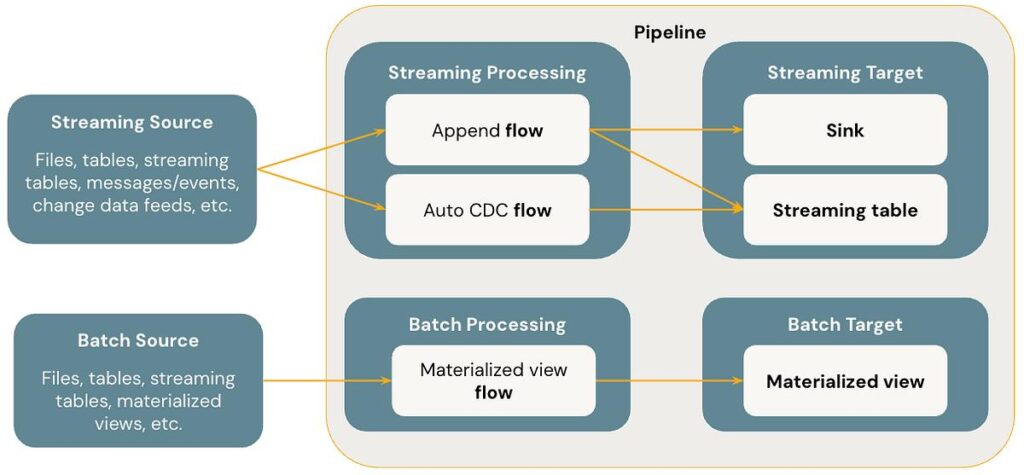
15. A hybrid architecture is often the practical answer
Many mature platforms use both CDC and batch.
Examples:
- CDC for transactional database replication, batch for SaaS APIs.
- CDC into raw warehouse tables, scheduled transformations into reporting marts.
- Near-real-time operational dashboards, daily finance reconciliation.
- Webhook-driven updates plus nightly full validation.
- Hourly incremental loads plus weekly full reconciliation.
The architecture should optimize each stage for its purpose.
There is no prize for making the entire platform uniformly streaming or uniformly batch.
A decision framework
Choose batch synchronization when:
- minutes or hours of latency are acceptable;
- source volume is manageable;
- extraction windows are predictable;
- operational simplicity matters;
- reruns and reconciliation are important;
- the source does not support reliable CDC;
- the business cannot justify continuous infrastructure.
Consider CDC when:
- low latency creates measurable value;
- the source supports dependable change capture;
- repeatedly scanning large tables is expensive;
- change volume is much smaller than total data volume;
- downstream systems need a continuous change stream;
- the team can operate offsets, replay, monitoring and recovery.
Consider a hybrid when different sources or consumers have different requirements.
Questions to answer before implementation
For each dataset, document:
- What is the maximum acceptable data age?
- What business decision requires that latency?
- How are inserts detected?
- How are updates detected?
- How are deletes detected?
- Can the source expose a reliable change stream?
- How much load can the source tolerate?
- What is the expected daily change volume?
- How will duplicates be handled?
- Does event ordering matter?
- How will schema changes be handled?
- How long can changes be replayed?
- What happens after an extended outage?
- How will source and target be reconciled?
- Who owns incidents?
- What is the full operating cost?
If these questions cannot be answered, the refresh architecture is not yet ready for implementation.
A simple example
Suppose an organization has three reporting needs.
Sales pipeline dashboard: users need updates within 30 minutes.
Finance revenue dashboard: numbers are certified each morning.
Operational order monitor: teams need updates within two minutes.
Using one refresh strategy for all three is unnecessary.
The sales pipeline may use frequent incremental API batches.
Finance may use a controlled nightly batch followed by reconciliation.
Orders may justify CDC from the transactional database.
All three can ultimately feed the same warehouse while operating at different ingestion and transformation frequencies.
That is usually more efficient than imposing “real time” everywhere.
Frequently asked questions
Is CDC always faster than batch?
CDC is designed for low-latency change propagation, but end-to-end freshness also depends on connectors, processing, transformations and target systems. A poorly operated CDC pipeline can still accumulate lag.
Is CDC cheaper than batch?
Not necessarily. CDC can reduce repeated source scans but may require continuously running connectors, streaming infrastructure and more operational support. Compare total cost for the specific workload.
Can batch pipelines be near real time?
They can run very frequently, but shorter intervals increase source queries and orchestration overhead. At some point, CDC or event-driven integration may be more appropriate.
How does CDC capture deletes?
It depends on the source technology. Log-based CDC can often emit delete events. API integrations may need soft-delete flags, deleted-record endpoints or periodic reconciliation.
Do analytics warehouses need real-time data?
Only when a business use case needs it. Many analytical decisions tolerate minutes or hours of latency. Define the freshness requirement before selecting the technology.
Can CDC and batch be used together?
Yes. Hybrid architectures are common and often preferable. Different sources, transformations and reports can use different refresh patterns.
Does CDC eliminate the need for full reloads?
No. Recovery, schema changes, historical corrections or reconciliation may still require backfills or full reloads. A CDC design should include a bootstrap and recovery strategy.
Optimize for useful freshness, not maximum freshness
The best data platform is not the one with the lowest theoretical latency.
It is the one that delivers data within the time the business needs, with predictable cost, recoverability and trust.
Batch synchronization remains an excellent choice for many analytical workloads. CDC is powerful when low latency, high source volume or continuous change propagation justifies the added operational complexity.
Start with the decision that depends on the data. Define the maximum acceptable age. Then design the simplest reliable architecture that meets it.
If your organization is evaluating batch, CDC or a hybrid data integration architecture, Actiknow can help assess source capabilities, latency requirements, warehouse design, transformation strategy and operational controls. Contact Actiknow to discuss the data refresh architecture before committing to a technology.