
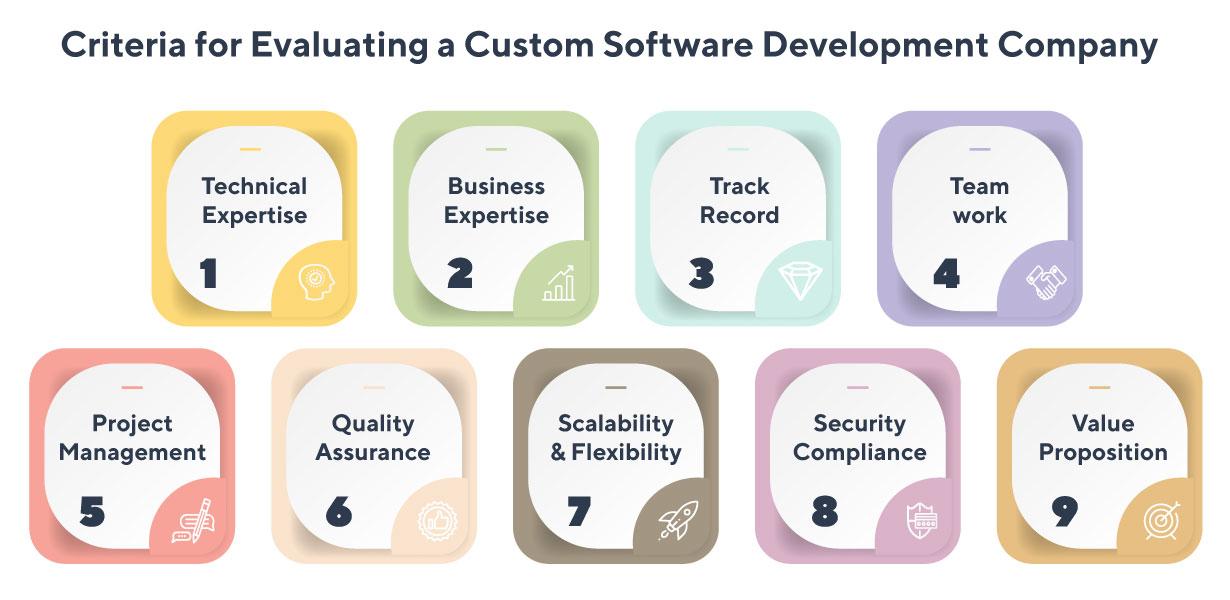
Choosing a development partner for a standalone application is difficult enough.
Choosing one for a system that must connect CRM, ERP, accounting, data warehouses, third-party APIs, identity providers and existing internal software is a different procurement problem.
In an integration-heavy project, the partner is not simply writing screens and endpoints. The team must understand data ownership, authentication, failure handling, security, reconciliation, deployment, support and how changes in one system affect another.
That makes the evaluation criteria different from “Can they build in our preferred framework?”
Use the following checklist to assess whether a custom software development partner can own the complete technical problem.
1. Start With Evidence of Similar Complexity
Ask for examples that resemble the architecture, not merely the industry.
A partner may never have built software for your exact sector but may have deep experience with the same technical problems.
Look for evidence involving:
- Multiple APIs.
- Complex authentication.
- Bidirectional synchronization.
- Legacy systems.
- Data migration.
- High-volume processing.
- Mobile and web clients.
- Role-based access.
- Cloud infrastructure.
- Reporting or analytics.
- Third-party vendor dependencies.
Ask the partner to explain what was difficult and how the architecture handled it.
A polished screenshot is much less informative than a clear explanation of data flow, failure modes and trade-offs.
Actiknow’s custom solutions practice covers web and mobile applications, API integrations, databases and automation. When assessing any vendor, verify that breadth through concrete technical discussion rather than service-page labels alone.

2. Ask Who Will Actually Work on the Project
Sales capability and delivery capability are not the same.
Understand the proposed team.
Ask:
- Who is the technical architect?
- Who owns project delivery?
- Who handles UX and UI?
- Who builds the backend?
- Who builds the frontend or mobile app?
- Who owns QA?
- Who handles DevOps?
- Who is responsible for integration troubleshooting?
- How much of the team is allocated to the project?
- Will senior people remain involved after kickoff?
You should know whether the team presented during the proposal is the team that will actually deliver the work.
3. Evaluate Discovery Before Development
Complex software should not begin with developers immediately writing code from a short feature list.
A good discovery process should clarify:
- Business goals.
- Users and roles.
- Current workflow.
- Target workflow.
- System boundaries.
- Data sources.
- Integrations.
- Security requirements.
- Non-functional requirements.
- Reporting.
- Migration.
- Operational ownership.
- Constraints.
- Acceptance criteria.
- Risks.
The output should be tangible.
Useful discovery deliverables can include wireframes, user journeys, architecture diagrams, data models, API plans, backlog items and implementation phases.
Actiknow’s custom development process begins with discovery and planning, followed by design and prototyping before development. Whatever partner you choose, ask to see what their discovery phase actually produces.
4. Ask for the Architecture Before the Estimate Becomes Fixed
A complex integration estimate without an architecture is often just a guess with confidence formatting.
The partner should identify:
- Application components.
- Frontend and backend technologies.
- Database.
- Hosting.
- Integration layer.
- Authentication.
- Queues or asynchronous processing where needed.
- File storage.
- Caching.
- Monitoring.
- Logging.
- Environments.
- Deployment model.
- Backup and recovery.
- External dependencies.
The architecture does not need to be final before discovery, but the major assumptions behind cost and timeline should be visible.
5. Check Whether They Understand System of Record
For every important data domain, someone must decide which system is authoritative.
Examples:
- Customer master.
- Product.
- Pricing.
- Order.
- Invoice.
- Payment.
- Employee.
- Document.
- Subscription.
The development partner should ask these questions.
If the proposed design simply “syncs everything both ways,” that is a warning sign.
Bidirectional synchronization without ownership rules creates conflicts and difficult support problems.
6. Ask How Integrations Fail
This is one of the best technical evaluation questions.
Ask:
“What happens if System B is unavailable after System A has already accepted the transaction?”
A strong answer should discuss concepts such as queues, retries, idempotency, transaction state, compensation, reconciliation, alerts and manual exceptions where relevant.
The exact design depends on the project.
What matters is that the team thinks beyond the successful API call.
7. Ask How Duplicate Transactions Are Prevented
Network retries and webhook redelivery can create duplicate work.
For financial, order or workflow integrations, the partner should have a clear strategy for idempotency and cross-system identifiers.
Ask how the application determines whether a business event has already been processed.
This is more revealing than asking whether the team “has API experience.”
8. Review Authentication and Credential Handling
Integration projects can accumulate many credentials.
These may include OAuth tokens, API keys, service accounts, certificates and database credentials.
Ask:
- Where are secrets stored?
- Who can access them?
- How are tokens refreshed?
- How is access revoked?
- Are credentials separated by environment?
- How are secrets prevented from entering logs?
- How are customer-managed credentials handled?
Actiknow’s security documentation describes OAuth where possible, encrypted API connections, MFA, least privilege and controlled access. Use comparable concrete controls when evaluating any development partner.
9. Evaluate Security as a Development Process
A security page is useful, but security should appear in the delivery process.
Ask about:
- Peer review.
- Staging environments.
- Dependency updates.
- Access control.
- Secure coding.
- Logging.
- Production access.
- Vulnerability handling.
- Incident response.
- Backups.
- Change management.
- Security testing.
The partner should be able to explain who is responsible for each control.
10. Review Tenant and Permission Architecture
If the application serves multiple customers, business units or organizations, tenant isolation is a core architecture decision.
Ask how the design prevents one tenant from accessing another tenant’s data.
For complex permissions, request a role and access model.
Do not accept “we will add roles” as the complete security design.

11. Understand Data Migration Ownership
Integration projects often include historical data.
Ask:
- Who profiles the source data?
- Who maps fields?
- Who cleans duplicates?
- Who defines transformation rules?
- Who validates migrated records?
- How many trial migrations are planned?
- How is final migration reconciled?
- What is the rollback plan?
Data migration should have its own plan and acceptance criteria.
12. Ask How They Test Integrations
Unit tests are not enough.
Integration testing should cover:
- Valid transactions.
- Invalid data.
- Authentication failure.
- Timeouts.
- Rate limits.
- Duplicate events.
- Partial failure.
- Retries.
- Vendor API errors.
- Large payloads.
- Unexpected nulls.
- Permission errors.
- Reconciliation.
The partner should also explain how third-party systems are simulated or isolated during testing.
13. Look for a Real QA Process
Ask who owns QA and when testing begins.
A good process should not wait until the end of the project.
Testing may include:
- Functional QA.
- Regression testing.
- Integration testing.
- Cross-browser testing.
- Mobile-device testing.
- Performance testing.
- Security testing.
- User acceptance testing.
The exact mix depends on the application.
Actiknow’s custom solutions process describes testing during development and regular code review. Use those kinds of concrete practices as evaluation criteria, not vague promises of “quality.”

14. Ask to See Delivery Governance
Complex projects need predictable communication.
Ask for the actual cadence.
For example:
- Sprint length.
- Planning meeting.
- Demo.
- Status report.
- Risk review.
- Backlog management.
- Decision log.
- Change-control process.
- Escalation path.
- Release cadence.
A project manager sending messages is not the same as delivery governance.
You should be able to see progress, decisions, risks and scope movement.
15. Understand How Scope Changes Are Handled
Integration projects uncover new information.
A vendor that claims there will be no change is unrealistic.
Ask:
- How are new requirements documented?
- How is impact assessed?
- Who approves changes?
- How are timeline and cost updated?
- How is the original scope protected?
Good change control allows the product to evolve without making the commercial model meaningless.
16. Evaluate Documentation Quality Before Signing
Ask to see anonymized examples of technical documentation.
Useful project documentation can include:
- Architecture.
- Data model.
- API specification.
- Integration mapping.
- Environment setup.
- Deployment process.
- Runbook.
- Test plan.
- Release notes.
- Known limitations.
- Support procedures.
The objective is not documentation volume.
It is whether another competent team could understand and operate the system.

17. Clarify IP Ownership
The contract should clearly state who owns the custom source code and project-specific deliverables.
Also identify third-party components and licenses.
Ask:
- Who owns the repository?
- Who owns designs?
- Who owns database schemas?
- Who owns infrastructure configuration?
- Are proprietary vendor libraries required?
- Are there recurring license obligations?
- Can another development team maintain the software?
Legal counsel should review the contract where appropriate.
18. Keep Repositories and Cloud Accounts Under Appropriate Control
Where practical, the client should have visibility and appropriate ownership or administrative access to core project assets.
This can include:
- Source repositories.
- Cloud subscriptions.
- Domains.
- App-store accounts.
- Analytics accounts.
- Third-party services.
- CI/CD.
- Monitoring.
- Backups.
A development partner can manage these resources without becoming the only entity capable of accessing them.
19. Ask About Deployment and Environments
A professional delivery process usually separates development, staging or test, and production appropriately.
Ask:
- How is code promoted?
- Who can deploy?
- Are deployments automated?
- How are environment variables managed?
- How is database migration handled?
- How is rollback performed?
- How are emergency fixes released?
Deployment should not depend on one developer manually remembering a sequence of server commands.
20. Evaluate Operational Monitoring
After launch, how will anyone know the system is healthy?
Ask about:
- Application errors.
- API failures.
- Queue backlog.
- Job failures.
- Performance.
- Infrastructure.
- Authentication failures.
- Integration latency.
- Critical business transactions.
Monitoring should support the actual operational risks of the application.
21. Ask What Happens After Launch
Many proposals become vague at go-live.
Clarify:
- Warranty period.
- Bug-fix responsibility.
- Support hours.
- Response times.
- Maintenance plans.
- Security updates.
- Dependency upgrades.
- Infrastructure support.
- Enhancement process.
- Knowledge transfer.
Actiknow publishes ongoing maintenance plans that include bug fixes, adaptive maintenance and performance optimization. Regardless of vendor, post-launch ownership should be explicit before development begins.
22. Test Their Ability to Explain Trade-Offs
A strong technical partner should not agree with every initial idea.
Ask questions where there is no single correct answer.
For example:
- Should this workflow be synchronous or asynchronous?
- Should we build this feature or use a vendor?
- Should we use microservices?
- Should we use native mobile or cross-platform?
- Should reporting query the operational database?
- Should this integration be real time?
Listen for reasoning.
A partner who explains trade-offs is more useful than one who simply confirms the buyer’s preferred technology.
23. Be Careful With Technology Fashion
The latest framework is not automatically the right choice.
Evaluate technology based on:
- Team availability.
- Maturity.
- Ecosystem.
- Security.
- Performance.
- Maintainability.
- Hosting.
- Long-term support.
- Fit for the application.
Ask why each major technology was selected.
The answer should connect to the requirements.
24. Evaluate Commercial Transparency
Understand what the estimate includes.
Ask about:
- Discovery.
- Design.
- Development.
- QA.
- Project management.
- DevOps.
- Deployment.
- Migration.
- Documentation.
- Training.
- Warranty.
- Support.
- Third-party costs.
- Cloud costs.
- Travel where applicable.
- Taxes.
- Change requests.
A lower development rate can still produce a higher project cost if important activities are excluded.
25. Compare Teams, Not Hourly Rates
For a complex project, productivity and decision quality matter.
A senior architect preventing a poor data model can save far more than the difference between two hourly rates.
Compare:
- Team composition.
- Experience.
- Delivery process.
- Architecture quality.
- Communication.
- QA.
- Documentation.
- Risk ownership.
- Support.
- Total estimated effort.
Price still matters, but it should be evaluated in the context of the complete delivery model.
26. Ask for References That Match the Risk
If the project is integration-heavy, ask references about integration delivery.
If the biggest risk is communication, ask about project management.
If the project will require years of support, ask about post-launch responsiveness.
Useful reference questions include:
- Did the team surface risks early?
- Were estimates understandable?
- How were changes handled?
- Did senior people stay involved?
- Was documentation usable?
- How did the team respond to production issues?
- Would you use them again for a similarly complex project?
27. Run a Paid Discovery or Technical Spike When Needed
If the project contains major unknowns, a small paid engagement can be more informative than another proposal round.
A discovery phase or technical spike can validate:
- API feasibility.
- Legacy-system access.
- Authentication.
- Performance.
- Data quality.
- Architecture.
- Migration approach.
- High-risk workflows.
The output should belong to the project and remain useful even if the client chooses another implementation partner.
28. Define Handover Before the Project Starts
Handover is not a final-week activity.
Define required deliverables in the contract.
Examples:
- Source code.
- Design files.
- Architecture documentation.
- Database documentation.
- API documentation.
- Deployment instructions.
- Infrastructure configuration.
- Credentials transferred through a secure process.
- Test assets.
- Operational runbooks.
- Training.
- Open-issue register.
- Third-party service inventory.
The project should be operable without indefinite dependence on undocumented knowledge.

29. Use a Weighted Evaluation Matrix
Create a procurement scorecard around the project’s actual risks.
Possible categories:
- Architecture and technical approach.
- Integration experience.
- Security.
- Delivery governance.
- QA.
- Documentation.
- Team quality.
- Communication.
- Commercial model.
- Post-launch support.
- IP and handover.
- Relevant references.
Weight categories according to importance.
For an integration-heavy financial system, architecture, security and integration reliability may matter more than visual design.
For a customer-facing product, UX may deserve greater weight.
30. Watch for Red Flags
Common warning signs include:
- A fixed estimate before meaningful discovery.
- No questions about data ownership.
- No questions about failure handling.
- Architecture described only as a technology list.
- Testing left almost entirely to the client.
- No clear technical lead.
- No staging environment.
- Production credentials shared casually.
- No documentation examples.
- Unclear code ownership.
- A proposal that excludes deployment.
- No post-launch plan.
- Every requirement accepted without challenge.
- A very low estimate with major activities missing.
These do not automatically prove the partner cannot deliver, but they deserve investigation.
A Short Evaluation Checklist
Before selecting a custom software development partner, confirm that you understand:
- Who will actually deliver the project.
- What discovery produces.
- The proposed architecture and its assumptions.
- System-of-record decisions.
- Integration failure and retry design.
- Security and credential handling.
- Tenant and permission architecture.
- Data migration ownership.
- QA and integration testing.
- Delivery cadence and change control.
- Documentation deliverables.
- IP and repository ownership.
- Deployment and rollback.
- Monitoring and support.
- Post-launch maintenance.
- Handover requirements.
- Total commercial scope.
Frequently Asked Questions
What should I look for in a custom software development partner?
Look beyond programming languages. Evaluate architecture, integration experience, team quality, security, QA, delivery governance, documentation, communication, support and handover.
Should the development partner own the source code?
For bespoke software funded by the client, buyers commonly expect ownership or broad rights to the custom code, subject to the contract and third-party components. Have the agreement reviewed appropriately and clarify repository access from the beginning.
How can I compare software development proposals?
Normalize the scope first. Confirm whether each proposal includes discovery, design, QA, DevOps, migration, project management, deployment, documentation, warranty and support. Then compare team and approach as well as price.
Is a fixed-price contract better?
It can work when scope and assumptions are sufficiently defined. Complex integration projects often contain uncertainty, so discovery, phased delivery or controlled change mechanisms may be more realistic than pretending every detail is known upfront.
How important is industry experience?
Relevant industry knowledge can help, but technical similarity may be more important for some projects. A team with deep experience in the same integration, security and workflow problems can be a strong fit even if the end industry differs.
Should I ask for a technical architecture during the proposal?
For a complex project, you should at least understand the proposed architecture, key components, integration approach and major assumptions. Detailed architecture may be a discovery deliverable.
What documentation should be included?
At minimum, documentation should be sufficient to understand the architecture, data model, integrations, environments, deployment, operational support and important design decisions.
What happens if we need to change development partners later?
A well-governed project should make transition possible through client-accessible repositories, clear IP terms, infrastructure access, documentation, deployment processes and knowledge transfer.
Conclusion
The best custom software development partner for a complex integration project is not simply the team that can write the required code.
It is the team that can understand the business process, design system boundaries, handle failure safely, protect data, test the complete workflow, communicate trade-offs, document decisions and leave the client with an operable product.
Evaluate the delivery system, not just the technology stack.
If you are evaluating a complex application or integration project, Actiknow can help with discovery, architecture, custom development, integrations, testing, deployment and ongoing support. Discuss your software project with Actiknow.