

Introduction
An AI agent that can explain a query plan is useful. An AI agent that can change a production warehouse is a different proposition. Amazon Redshift’s integration with Agent Toolkit for AWS, announced August 27, 2026, makes it easier to work with Redshift from AI development environments. The executive question is not whether an agent can produce SQL. It is which tasks it should be allowed to execute, with which credentials, and under whose approval.
What AWS actually introduced
The integration combines an AWS Model Context Protocol (MCP) server, which executes authenticated AWS API operations, with curated Redshift skills containing procedural guidance and references. AWS describes support for metadata discovery, SQL syntax, loading patterns, materialized views, troubleshooting and migration activities. It works with provisioned clusters and Redshift Serverless workgroups, subject to service availability. AWS says the skills are available at no additional charge; normal AWS service usage and the costs of an agent environment may still apply. Read the official AWS announcement for the supported scope.
The important architectural distinction
The language model proposes steps. Skills supply relevant instructions and examples. The MCP server provides an execution route to AWS. IAM, database permissions, networking and approval workflows must determine what is actually possible. A well-written prompt is not an authorization boundary. Likewise, a skill package is not proof that a generated command is safe for your particular schema, workload or data classification.

Where the toolkit can help
1. Schema discovery
An engineer can ask an agent to inspect table definitions, identify likely join keys, and summarize dependencies before drafting a change. Require read-only access and validate the inventory against the catalog.
2. SQL drafting and explanation
Agents can generate candidate queries, explain Redshift-specific syntax and propose alternatives. Use EXPLAIN and a nonproduction test dataset before accepting changes.
3. Incident triage
An agent can organize evidence from query history, workload configuration and recent deployments. This may shorten investigation, but diagnosis remains a hypothesis until supported by telemetry.
4. Data loading design
The skills can help compare COPY patterns, file formats and staging approaches. Test error handling, replay, duplicate prevention and data-quality checks.
5. Migration planning
Agents can assist with source inventory, conversion candidates and reconciliation scripts. They should not certify that financial or operational results match without independent controls.
Where human ownership is non-negotiable
Production DDL and destructive changes: require reviewed change tickets, backups or recovery planning, and rollback criteria. IAM and credential changes: security owners must approve scope, duration and rotation. Cost-sensitive operations: warehouse resize, concurrency settings and large scans need budget guardrails. Sensitive-data access: classify data and prevent unnecessary extraction into agent context or logs. Migration acceptance: business owners must sign off on reconciled outputs, not merely successful job execution. Incident remediation: a person should decide whether to pause workloads, roll back releases or alter customer-facing availability.

A practical permission model
Start with three separate identities or execution modes. Discovery mode uses narrowly scoped read-only metadata and permitted monitoring access. Development mode may run approved SQL in a sandbox with synthetic or masked data. Production mode has no autonomous write access; a human reviews a generated change and executes it through the existing deployment pipeline. Prefer short-lived credentials and explicit role assumptions. Record the agent tool call, initiating human, environment, resource, proposed command, approval and outcome. Do not put passwords or raw secret values into prompts.

Threats to test before rollout
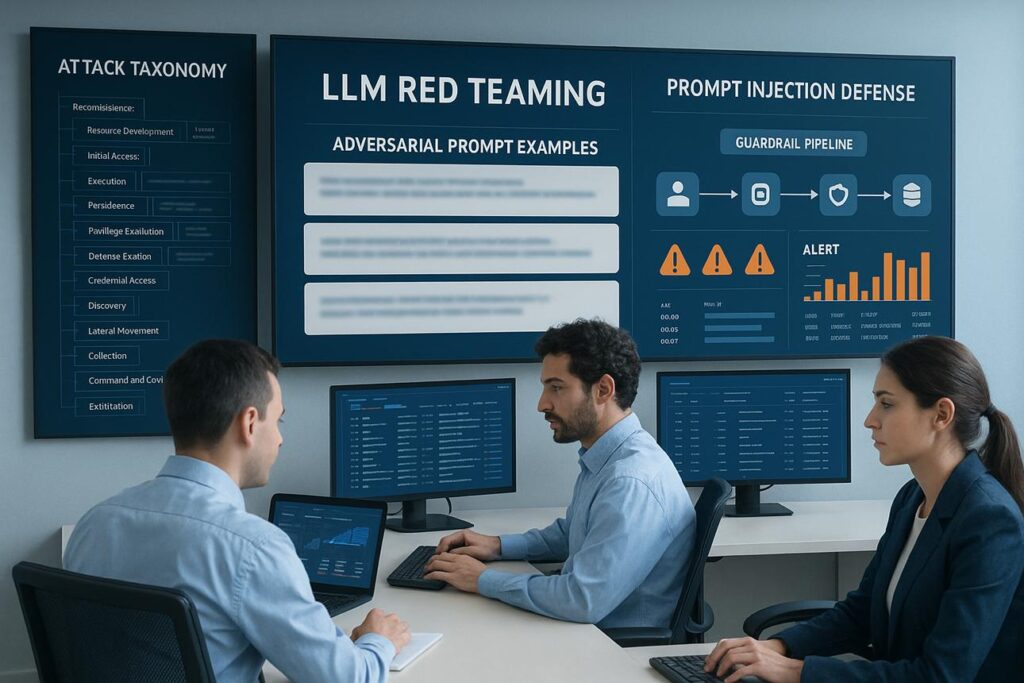
Prompt injection: a malicious table comment or external document can contain instructions that attempt to redirect the agent. Treat retrieved content as data, not authority. Excessive permissions: an agent connected with administrator credentials can make a small reasoning error very expensive. Data leakage: SQL results or secrets can enter transcripts and external model services. False confidence: a fluent explanation may conceal a wrong join, stale statistics or incomplete migration validation. Irreversibility: a successful API response does not mean a production change was desirable. Establish allowlists, review gates, data minimization and audit retention.
A safe operational workflow
A user describes a slow dashboard. The agent first retrieves approved query metadata and the query plan. It proposes three hypotheses, such as high scan volume, skewed joins or concurrency pressure, and cites the supporting evidence. An engineer validates each hypothesis against query metrics and a controlled replay. The agent drafts a candidate SQL or physical-design change in a development environment. The team benchmarks p50 and p95 latency, scanned data, concurrency effects and cost. Only then does a reviewer approve deployment. Monitoring confirms the intended improvement and triggers rollback if regressions appear. This sequence is more defensible than allowing an agent to optimize production on its own.
How to measure value without invented ROI
Define a baseline before introducing the toolkit. Measure time to produce a reviewed diagnostic, percentage of SQL suggestions that pass tests, number of human corrections, incident resolution time, migration reconciliation exceptions and change failure rate. Track token or agent costs alongside Redshift compute and engineering review time. Separate drafting speed from end-to-end delivery time. A faster first draft that requires extensive correction is not necessarily an efficiency gain.
A 30-day pilot plan
Week 1
inventory use cases, data classifications, IAM roles, logs and approval requirements. Select one read-only troubleshooting workflow and one nonproduction SQL workflow.
Week 2
configure the toolkit in a controlled environment. Test identity boundaries, tool visibility, logging and secret handling. Create representative success and failure cases.
Week 3
run parallel trials against the current human workflow. Score accuracy, evidence quality, elapsed time, review effort and operational cost. Include deliberately ambiguous prompts and prompt-injection tests.
Week 4
publish a decision record. Approve limited use cases, prohibit unsafe actions, assign owners and set quarterly permission reviews. Expand only after the pilot meets documented acceptance criteria.

Executive decision checklist
- Can we identify the human behind every agent action?
- Can the agent read only what is necessary?
- Are writes blocked or independently approved?
- Can we reproduce and audit every consequential operation?
- Are query outputs and credentials protected from unnecessary exposure?
- Can we quantify quality and cost against a baseline?
- Is there a tested rollback process?
If any answer is unclear, the next investment should be governance and observability rather than broader autonomy.
How this fits into a broader data program
Agent-assisted administration works best when the underlying warehouse has clear ownership, reliable definitions and disciplined deployment. Organizations building those foundations can benefit from Actiknow’s business intelligence consulting and data integration services. Where a governed workflow or approval interface is needed around operational processes, custom solutions may be relevant. The technology should fit the operating model, not replace it.
Frequently asked questions
1. Does Redshift Agent Toolkit replace a DBA?
No. It can assist with discovery, drafting and troubleshooting, while humans remain responsible for authorization, reliability, performance and production change approval.
2. Is the toolkit limited to Redshift Serverless?
No. AWS describes support for both provisioned Redshift clusters and Serverless workgroups.
3. Does using the toolkit automatically grant database access?
No. Actions depend on the configured AWS and database permissions. Those permissions still require deliberate design and verification.
4. Can an agent run SQL directly?
The integration provides an execution path for supported operations when configured with sufficient access. Whether that should be permitted in production is a governance decision.
5. Is it free?
AWS says the Redshift skills are available at no additional charge. Existing service consumption, agent infrastructure and operational review may still incur costs.
6. What is the best first use case?
Read-only query troubleshooting or metadata discovery offers useful learning without introducing autonomous production changes.
7. How should sensitive information be handled?
Use least privilege, minimize returned data, avoid raw secrets in model context, and validate transcript, logging and retention settings.
8. Can it migrate an entire warehouse automatically?
It can assist with discovery, conversion, movement and validation planning. Reconciliation, performance acceptance and cutover require controlled testing and accountable sign-off.
9. What metrics show whether the pilot worked?
Compare diagnostic accuracy, review effort, time to validated resolution, change failure rate and total operating cost with a pre-pilot baseline.
10. When should an organization stop a pilot?
Stop or restrict it if unauthorized actions are possible, sensitive data enters unapproved contexts, evidence cannot be audited, or output quality is not reliably verifiable.
Conclusion
The Redshift Agent Toolkit makes warehouse expertise more accessible through agent workflows. Its strongest near-term use is accelerating evidence gathering, SQL drafting and structured investigation. The boundary is equally clear: an agent may recommend an action, but production authority, data protection and accountability must remain explicit. Organizations that establish those controls can test the opportunity without confusing assistance with autonomous operations.
Next step
If your team is evaluating agent-assisted analytics operations, discuss a scoped assessment of your reporting architecture, integration needs and governance controls with Actiknow.
Sources and verification
AWS announcement: Amazon Redshift integrates with Agent Toolkit for AWS (August 27, 2026). AWS Secrets Manager announcement: safe secrets handling in Agent Toolkit (June 17, 2026). Product capabilities and service descriptions were checked against the linked official and Actiknow pages.