
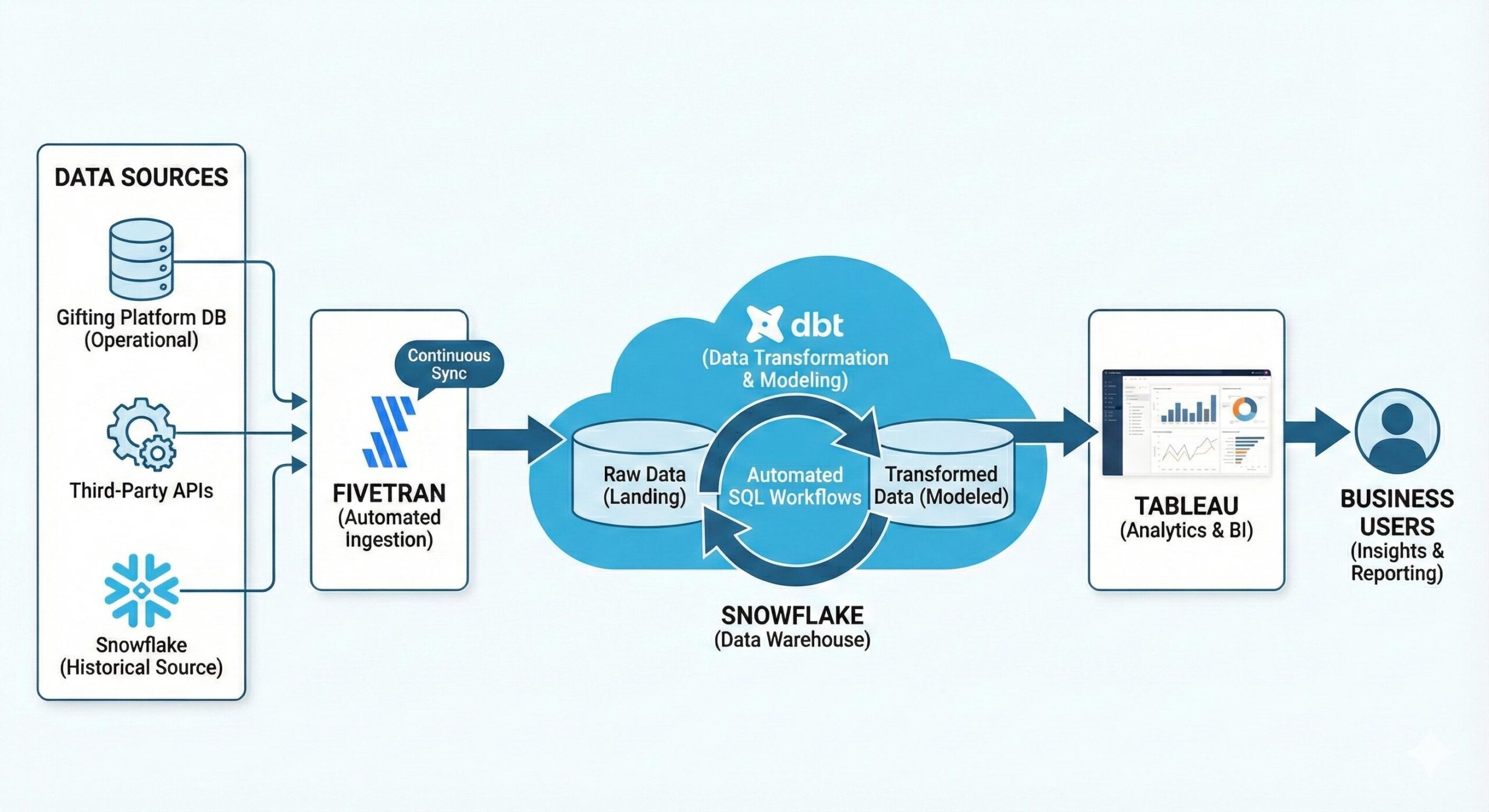
Enterprise data ingestion is no longer a simple build-versus-buy decision.
A Snowflake team can now choose Snowflake Openflow, a managed connector platform such as Fivetran, custom pipelines, or a combination of all three.
The right answer depends less on feature checklists and more on four questions:
- What sources must you ingest?
- Where is the difficult networking boundary?
- How much operational ownership does your team want?
- Which integrations are genuinely unusual?
Snowflake Openflow has also changed quickly in 2026. Current Snowflake documentation shows second-generation Openflow deployments and runtimes as generally available, with SQL-managed objects and standard Snowflake RBAC. Connector availability and release stage can differ from the runtime itself, so architects should check the exact connector they intend to deploy rather than treating “Openflow GA” as meaning every connector is GA.
Fivetran remains a broad managed integration platform with standard, Lite and partner-built connectors plus a Connector SDK. Custom engineering remains the escape hatch when neither managed option matches the source or the required business behavior.
Actiknow’s business intelligence and data engineering work commonly combines managed ingestion with custom engineering rather than forcing every source through one tool.
The Short Answer
Choose Snowflake Openflow when:
- Snowflake is the strategic data platform.
- The required connector is supported at an acceptable release stage.
- Snowflake-native RBAC and operational control are valuable.
- You want runtimes and integration infrastructure governed inside the Snowflake environment.
- Private connectivity or BYOC/Snowflake-hosted deployment options fit the security model.
- You expect to customize or build flows around the Openflow runtime model.
Choose Fivetran when:
- Broad connector coverage is the dominant requirement.
- You want a mature managed SaaS ingestion experience.
- Many sources are common SaaS, database, file or event systems.
- You want the vendor to absorb much of the connector maintenance.
- Its pricing and deployment model fit the expected change volume and governance requirements.
Choose custom pipelines when:
- The source has no suitable managed connector.
- The API requires unusual orchestration.
- Business-specific extraction logic is inseparable from ingestion.
- You need exact control over checkpoints, replay, data contracts or transformations.
- A managed connector would require so many workarounds that it stops being managed.
For many enterprises, the best architecture is mixed.
Do Not Start With the Tool
Start with an ingestion inventory.
For every source, record:
- Source type.
- Business owner.
- Technical owner.
- Expected tables/endpoints.
- Historical volume.
- Daily change volume.
- Required freshness.
- Delete behavior.
- Schema volatility.
- Authentication.
- Network location.
- PII classification.
- Backfill requirement.
- API limits.
- Recovery expectation.
- Destination.
- Business criticality.
Then evaluate tooling.
Without this inventory, teams often choose one platform and later discover that the difficult 20% of sources determine most of the engineering effort.
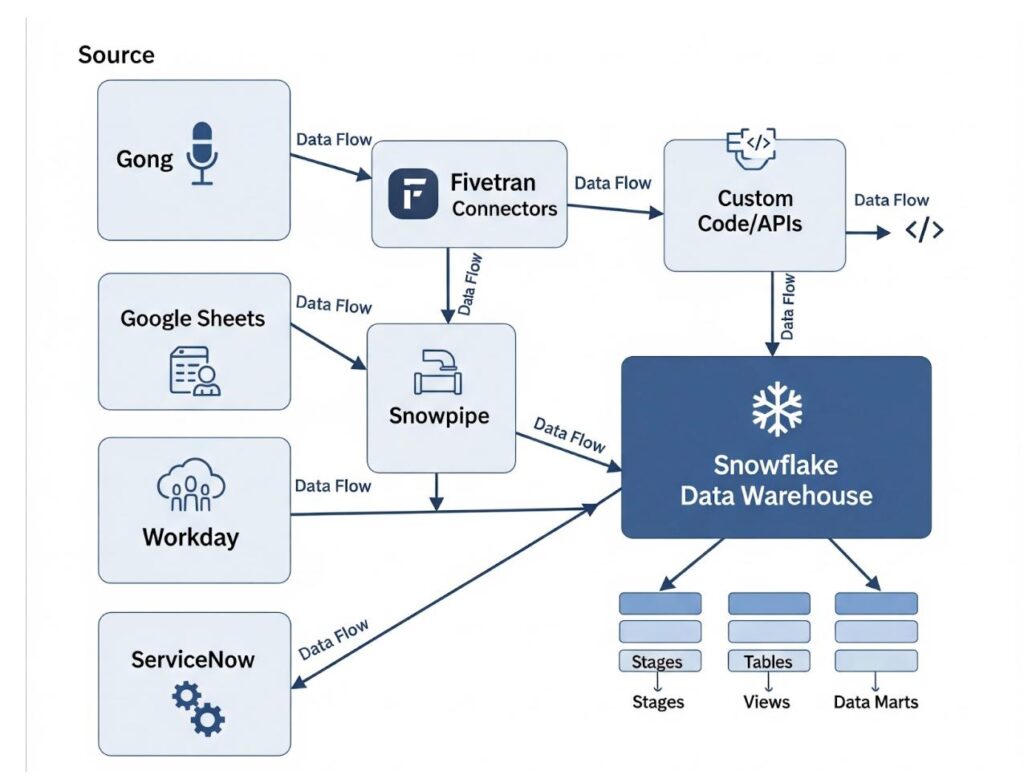
Snowflake Openflow: What It Is
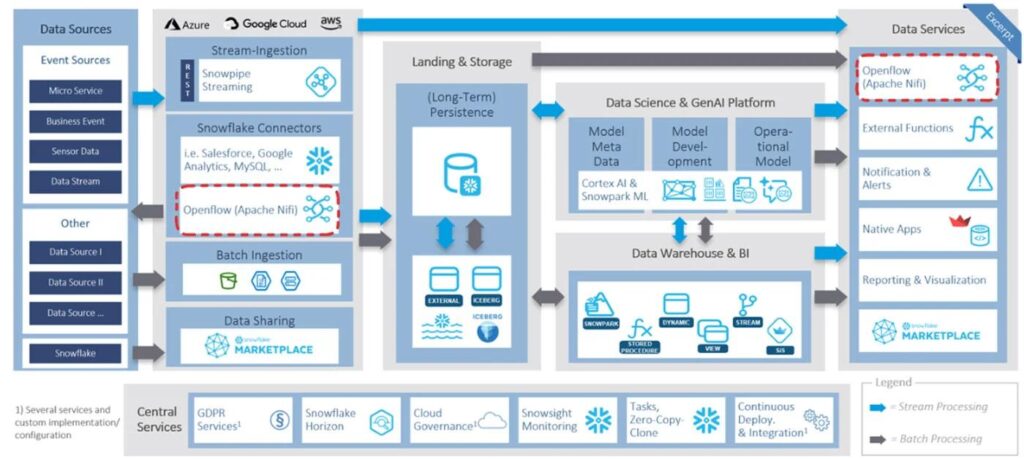
Snowflake describes Openflow as a multi-modal data integration service built around Apache NiFi.
It supports packaged connectors and customizable data flows, with deployment options that include Snowflake-hosted deployments and BYOC.
In Snowflake-hosted deployments, a deployment contains runtimes and a runtime executes connectors and flows.
Current gen 2 Openflow makes deployments and runtimes Snowflake objects that can be managed with SQL and standard RBAC.
This makes Openflow particularly interesting to organizations that want ingestion infrastructure governed alongside the rest of Snowflake.
Openflow Gen 2 Matters
As of October 2026, Snowflake documents gen 2 deployment and runtime objects as generally available.
Gen 2 adds:
- SQL lifecycle management.
- Schema-scoped objects.
- Standard Snowflake RBAC.
- Versioned connector configuration.
- UI and SQL management.
Snowflake’s documentation also notes that connector configuration can have a different release stage. For example, its current gen 2 quickstart identifies gen 2 connector configuration as Public Preview even though deployments and runtimes are GA.
That distinction should be part of production approval.
Check the exact connector card and documentation before committing.
Snowflake-Hosted Openflow vs BYOC
Openflow offers different operational models.
Snowflake-hosted deployment runs the runtime within Snowflake-managed infrastructure.
BYOC runs Openflow data-plane infrastructure in your own cloud environment.
The choice affects:
- Network access.
- Cloud ownership.
- Security controls.
- Operations.
- Cost model.
- Connectivity to private sources.
If the source is behind a firewall or private network, architecture should begin with connectivity rather than connector UI.
Openflow Networking Is a First-Class Design Concern
Snowflake-hosted Openflow uses network rules and external access integrations for outbound access.
Snowflake also documents options for private connectivity, including a Data Connectivity Proxy for reaching private VPC/on-premises sources and outbound PrivateLink in applicable configurations.
BYOC follows the network controls of the customer cloud environment.
Before selecting Openflow, map:
- Source hostname.
- Port.
- Public/private route.
- Firewall rules.
- DNS.
- TLS.
- Authentication.
- PrivateLink requirements.
- Data residency.
A connector is useless if the runtime cannot reach the source.
Openflow Execute-As Roles
Openflow runtimes use an execute-as role to access Snowflake objects.
That role should receive only the privileges required by the flows running in that runtime.
This creates an opportunity for clean least-privilege design.
Separate runtimes or roles may be appropriate for:
- Production vs development.
- Sensitive vs non-sensitive sources.
- Different business units.
- Different destination databases.
Avoid making the ingestion runtime effectively ACCOUNTADMIN.
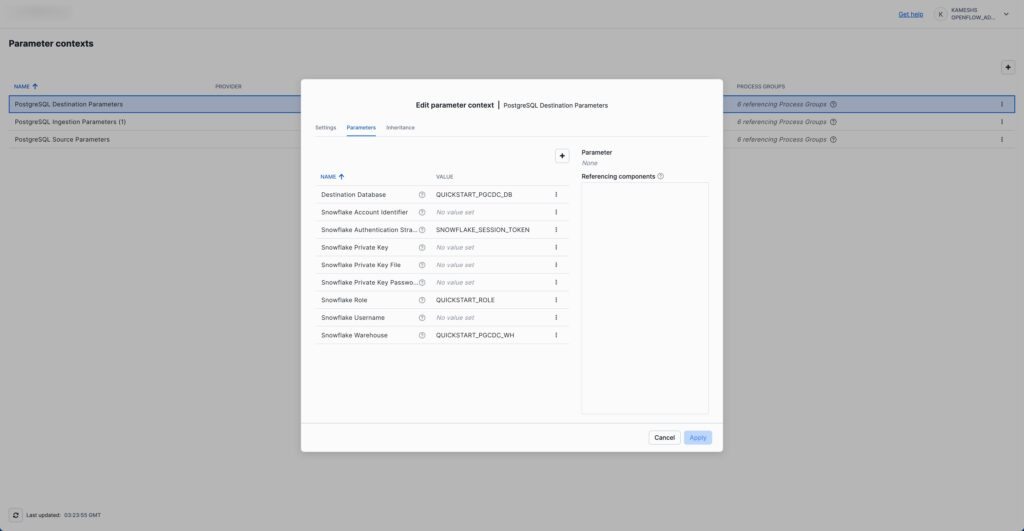
Openflow Can Be More Than Packaged Connectors
One strategic difference is that Openflow is also a flow runtime.
Teams can use existing connectors as a starting point and create customized flows.
That can be valuable when a source is mostly standard but needs:
- Custom routing.
- Enrichment.
- Protocol handling.
- Special filtering.
- Multiple destinations.
- Custom operational behavior.
The tradeoff is ownership.
The more you customize, the more your team owns.
Fivetran: What It Optimizes For
Fivetran’s core value is managed replication across a broad catalog of sources and destinations.
Its connector categories include:
- Standard managed connectors.
- Lite connectors.
- Partner-built connectors.
- Connector SDK options for custom sources.
For organizations with dozens of common SaaS systems, that breadth can be more important than platform-native integration.
A managed connector can remove a lot of engineering work:
- Authentication patterns.
- Pagination.
- Incremental sync logic.
- Schema handling.
- Retries.
- API changes.
- Destination loading.
- Monitoring.
But connector behavior should still be validated source by source.
Fivetran and Snowflake
Fivetran supports Snowflake as a destination and can load into native Snowflake tables.
Its current Snowflake documentation also describes managed lakehouse/Iceberg options in beta configurations.
For a conventional warehouse architecture, a common pattern remains:
Source→ Fivetran→ Snowflake raw schema→ transformation→ marts→ BI
This is operationally straightforward and well understood.
Fivetran Networking and Deployment
Fivetran supports several connectivity models depending on product tier and configuration, including direct connections and private networking options.
It also supports SaaS and Hybrid deployment models for relevant connectors/destinations.
For security review, determine:
- Where connector processing runs.
- How it reaches the source.
- How it reaches Snowflake.
- Whether credentials leave the customer environment.
- Which private-network option is required.
- What plan supports that option.
Do not compare “Fivetran SaaS” with “Openflow BYOC” as if they were identical security architectures.
Custom Pipelines: What They Are Actually Good For
Custom ingestion is justified when it creates control that the business genuinely needs.
Examples:
- A proprietary partner API.
- A vendor with unusual pagination.
- Complex OAuth tenancy.
- Webhook plus reconciliation workflow.
- Custom binary/file protocol.
- Source-specific historical reconstruction.
- Strict replay semantics.
- Complex API cost optimization.
- Unusual data-residency constraints.
Custom does not mean writing a Python script and scheduling it.
A production pipeline also needs:
- State.
- Retries.
- Idempotency.
- Secrets.
- Schema handling.
- Logging.
- Metrics.
- Alerting.
- Backfills.
- Testing.
- Deployment.
- Runbooks.
- Ownership.
Include those in the cost comparison.
Connector Coverage Should Be the First Filter
Create three columns:
- Openflow supported?
- Fivetran supported?
- Custom required?
Then classify each source.
Do not assume a connector name means feature parity.
For databases, check:
- CDC method.
- Deletes.
- Schema evolution.
- Views.
- History.
- LOBs.
- Primary-key requirements.
- Supported versions.
For SaaS, check:
- Endpoints.
- Objects.
- Custom fields.
- Historical limits.
- Rate limits.
- Webhooks.
- Incremental behavior.
Coverage is about the required data, not the logo.
Release Stage Matters
This is especially important for a fast-moving platform such as Openflow.
Record whether each required component is:
- Generally available.
- Public preview.
- Private preview.
- Partner-built.
- Beta.
Your organization may accept preview features for internal analytics but reject them for finance or regulated reporting.
Make that a governance decision.
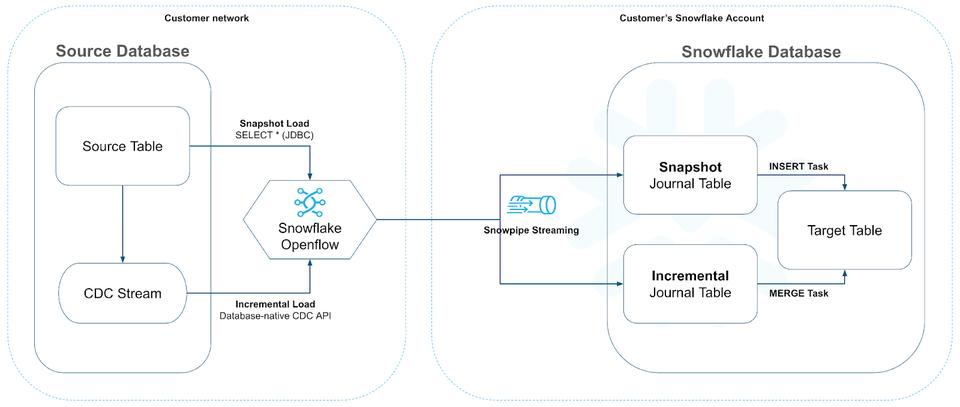
CDC Is Not One Feature
For database ingestion, test:
- Insert latency.
- Update latency.
- Delete capture.
- DDL changes.
- Large transactions.
- Initial snapshot.
- Replication restart.
- Log retention.
- Checkpoint recovery.
- Table reseed.
- Schema drift.
A checkbox labeled “CDC” does not tell you how the system behaves during failure.
SaaS APIs Need Different Evaluation
SaaS connectors are constrained by vendor APIs.
Evaluate:
- API quotas.
- Incremental cursor.
- Backfill window.
- Deleted-object behavior.
- Custom fields.
- Object relationships.
- Permission scopes.
- API version changes.
- Historical endpoints.
A managed connector can absorb much of this complexity, but verify that it extracts the objects the business actually needs.
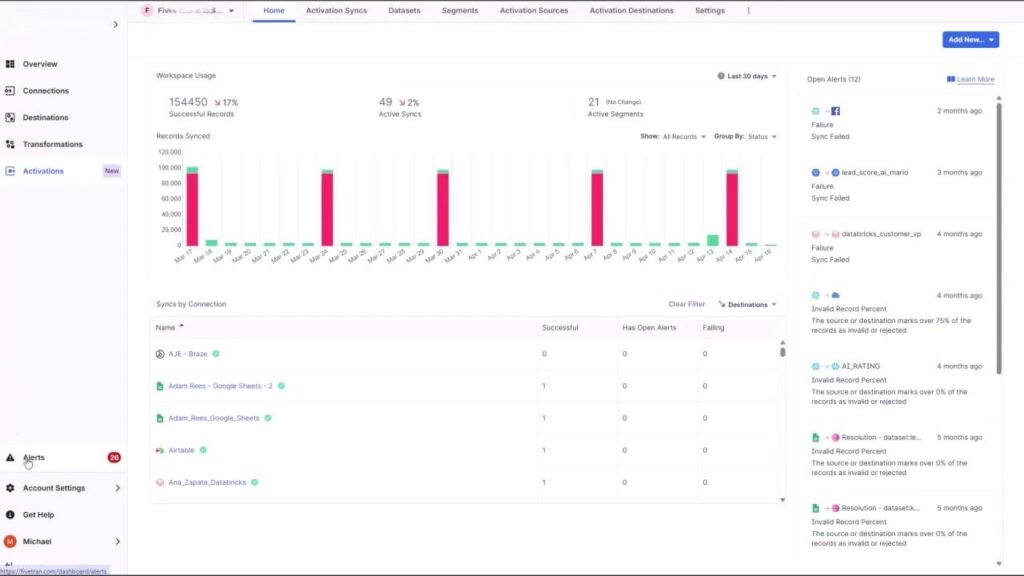
Observability: Ask What Happens at 3 AM
A connector platform should answer:
- Is the source current?
- When was the last successful checkpoint?
- How far behind is it?
- How many records moved?
- Did the schema change?
- Did an object fail?
- Can I replay?
- Can I resync one table?
- Who changed the configuration?
Then add business observability outside the connector:
- Does source revenue reconcile?
- Are expected customers present?
- Did daily volume collapse?
- Are duplicate rates normal?
Tool health is not data correctness.
Schema Drift Ownership
Ask who owns the response when:
- A column is added.
- A type changes.
- A field disappears.
- An API endpoint changes.
- A table is renamed.
Managed platforms reduce connector maintenance.
They do not remove downstream impact.
Your warehouse should still isolate raw ingestion from curated marts so source changes do not immediately break executive dashboards.
Transformation Should Usually Stay Separate
Do not turn the ingestion layer into an undocumented business-logic engine.
A clean pattern is:
Ingestion → source-aligned raw layer → transformations → governed marts.
This improves:
- Replay.
- Reconciliation.
- Lineage.
- Testing.
- Change control.
Openflow can transform flows and custom pipelines can do anything, but “can” does not mean business logic belongs there.
Fivetran similarly loads source data and can participate in broader transformation workflows, but the architecture should preserve clear ownership of business rules.
Cost: Compare Total Operating Cost
Include:
- Vendor subscription.
- Snowflake compute.
- Openflow runtime compute.
- Cloud/network charges.
- Private connectivity.
- Engineering time.
- On-call support.
- Connector upgrades.
- API maintenance.
- Backfills.
- Incident response.
Managed tooling can be more expensive per row and still cheaper overall if it removes engineering ownership.
Custom tooling can appear free until the first API change occurs.
Model expected three-year operating cost, not just month-one platform spend.
When Openflow Has a Strategic Advantage
Openflow becomes particularly attractive when:
- Snowflake is already central.
- The connector is supported.
- Security teams prefer Snowflake-native control.
- Teams want SQL-managed ingestion infrastructure.
- Private-source connectivity aligns with the deployment model.
- Customizable flows are valuable.
- The organization wants fewer external integration control planes.
The advantage is architectural consolidation.
That is not automatically the same as lowest cost or broadest coverage.
When Fivetran Has a Strategic Advantage
Fivetran is compelling when:
- Connector breadth matters most.
- The estate includes many SaaS applications.
- The team wants low operational involvement.
- Fast onboarding is important.
- Multi-destination support matters.
- The organization already operates Fivetran successfully.
The advantage is managed connector maturity and coverage.
When Custom Engineering Wins
Custom engineering wins when the integration itself is unique.
Examples:
- The source exposes business-specific APIs.
- You need a bespoke extraction sequence.
- Vendor rate limits require domain-specific scheduling.
- Data must be assembled from several API calls.
- A managed connector omits critical objects.
- You need custom event/replay semantics.
The advantage is control.
The cost is ownership.
A Mixed Architecture Is Usually More Rational
Example:
- Salesforce → Fivetran.
- PostgreSQL CDC → Openflow.
- Internal partner API → custom Python/service.
- SFTP partner feeds → managed file ingestion.
- Streaming events → dedicated streaming pattern.
All land in governed source-aligned schemas.
Transformation then standardizes them.
This avoids choosing a platform for ideological consistency.
Standardize the Operating Model Instead
Even with multiple ingestion technologies, standardize:
- Naming.
- Destination schemas.
- Freshness metadata.
- Alert severity.
- Ownership.
- Runbooks.
- Data contracts.
- Reconciliation.
- Secrets.
- Dev/prod separation.
- Incident process.
Operational consistency matters more than having one connector vendor.
A Practical Evaluation Scorecard
Score each candidate source across:
- Coverage.
- Freshness.
- Initial load.
- CDC.
- Deletes.
- Schema evolution.
- Networking.
- Authentication.
- Security.
- Observability.
- Replay.
- Backfill.
- Customization.
- Release stage.
- Cost.
- Team skills.
- Vendor lock-in.
- Operational ownership.
Weight criteria by source criticality.
A payroll source should not use the same weighting as a low-value marketing feed.
Proof of Concept the Hardest Source
Do not POC the easiest connector.
Choose a source with:
- High volume.
- Schema changes.
- Private networking.
- Deletes.
- Backfills.
- Sensitive data.
- Real API constraints.
Test failure and recovery.
If the tool works there, you have learned something meaningful.
Migration From Existing Pipelines
For each candidate:
- Stand up the new connector in parallel.
- Load historical data.
- Reconcile keys and totals.
- Compare incremental changes.
- Test deletes.
- Test schema change.
- Measure freshness.
- Validate downstream models.
- Cut over consumers.
- Retain rollback until stable.
Do not replace a working pipeline solely because a new platform exists.
Frequently Asked Questions
Is Snowflake Openflow a Fivetran replacement?
It can replace Fivetran for some sources and architectures, but connector coverage, maturity, release stage, networking and operational preferences differ. Evaluate source by source.
Is Snowflake Openflow generally available?
Snowflake documents Openflow Snowflake deployments and gen 2 deployment/runtime objects as generally available. Individual connector configuration and connector implementations can have different release stages, so check the exact connector.
Does Openflow run inside Snowflake?
Snowflake-hosted Openflow deployments run on Snowpark Container Services. Openflow also supports BYOC, where the data plane runs in the customer cloud environment.
Can Openflow connect to private data sources?
Yes, depending on deployment and configuration. Snowflake documents network rules, external access integrations, private connectivity options and a Data Connectivity Proxy for private VPC/on-premises sources in Snowflake-hosted deployments.
Does Fivetran support private networking?
Yes, Fivetran documents private networking and hybrid deployment options for applicable plans and connectors. Requirements vary by deployment model.
When should we build a custom connector?
Build when the source or required behavior is sufficiently unique that managed tools do not cover it cleanly, and when the organization is prepared to own reliability, upgrades and support.
Should one company standardize on only one ingestion tool?
Not necessarily. Standardizing operational controls and destination patterns is often more valuable than forcing every source through one technology.
Sources and Further Reading
- Snowflake Documentation: About Openflow Snowflake Deployments.
- Snowflake Documentation: Gen 2 Openflow quickstart.
- Snowflake Release Notes: Gen 2 deployments and runtimes.
- Snowflake Documentation: Private data-source connectivity.
- Fivetran Documentation: Snowflake destination.
- Fivetran Documentation: Connector SDK.
Conclusion
The best ingestion architecture is not “Openflow versus Fivetran versus custom.”
It is a portfolio decision.
Use managed connectors where they remove commodity engineering.
Use Snowflake-native ingestion where it improves platform control and fits the source.
Use custom pipelines where the integration genuinely requires custom behavior.
Then standardize the layers around them: source-aligned landing, reconciliation, transformation, observability and ownership.
If you are rationalizing a Snowflake ingestion estate, Actiknow can help inventory existing pipelines, evaluate managed versus custom options and design the downstream warehouse and BI layers. Discuss your Snowflake data engineering architecture with Actiknow.