

Production data pipelines fail.
Networks time out.
APIs return errors.
Warehouses restart.
A job finishes but the orchestrator loses the success response.
An engineer retries a backfill.
Failure is normal.
The dangerous part is when retrying the same work changes the result.
An idempotent data pipeline is designed so the same logical input can be processed again without creating duplicate or inconsistent business data.
Why Idempotency Matters
Imagine a pipeline that loads invoices.
It inserts 50,000 rows into the warehouse.
Before the job records its checkpoint, the process crashes.
The scheduler retries.
If the second run blindly inserts the same invoices, the warehouse now contains 100,000 rows.
Revenue doubles.
A technically reasonable retry has created a business incident.
Idempotency makes retry the safe default.
Actiknow’s business intelligence and data engineering services include cloud data pipelines, warehouse transformations and production reconciliation. Recovery behavior should be part of pipeline design, not an emergency procedure added after the first duplicate incident.
Define the Unit of Idempotency
Ask:
What exactly should be safe to repeat?
Possible units include:
- Source event.
- API page.
- File.
- Batch.
- Date partition.
- Business transaction.
- Transformation run.
- Backfill range.
The correct key depends on the source and destination.
A webhook pipeline may deduplicate event IDs.
A daily file pipeline may track file hashes.
A warehouse transformation may replace a date partition deterministically.
Use Stable Business Keys
The destination needs a reliable way to recognize the same entity.
Examples:
- invoice_id.
- order_id.
- payment_id.
- contact_id.
- source_system + source_record_id.
If the source does not provide a stable identifier, create one carefully from immutable attributes.
Avoid using load timestamp as the identity.
Every retry would generate a different value.
Prefer Upserts Over Blind Inserts
For mutable business entities, use merge/upsert logic.
Conceptually:
- If key exists, update it.
- If key does not exist, insert it.
This makes repeated processing converge toward the same state.
The exact implementation depends on Snowflake, BigQuery, Redshift or another destination.
Test updates and retries explicitly.
Upserts Alone Are Not Enough
A MERGE can still produce incorrect results if:
- Source batch contains duplicate keys.
- Join condition is wrong.
- Updates are nondeterministic.
- Delete logic is missing.
- Multiple pipelines write the same entity.
Idempotency is a system property.
It cannot be created by one SQL keyword.

Deduplicate Before the Merge
If the same business key appears multiple times in a batch, define which record wins.
Possible rules:
- Latest source_updated_at.
- Highest source sequence.
- Last event offset.
- Explicit source version.
Do not rely on arbitrary row order.
Make the winner deterministic.
Track Source Event IDs
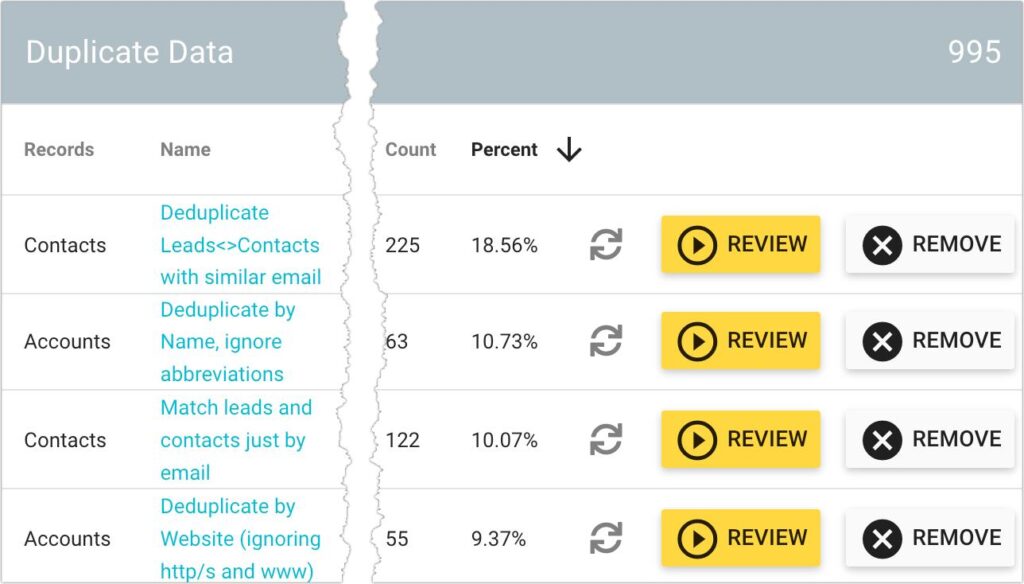
Webhook and event-driven systems often deliver duplicates.
Providers may retry when acknowledgements are delayed.
Store processed event identifiers.
Before applying a side effect, determine whether the event was already handled.
Retain IDs long enough to cover realistic replay windows.
Use Idempotency Keys for External Actions
Database updates are easier to make idempotent than external side effects.
Suppose a pipeline:
Processes an order.
Calls a billing API.
The API succeeds.
The pipeline times out before recording success.
A retry may charge the customer twice.
Where supported, send a stable idempotency key to the external service.
If the service does not support idempotency, design a reconciliation or lookup mechanism before repeating the action.
Separate State Changes From Notifications
Avoid tightly coupling durable data processing with one-time notifications.
For example:
- Transaction commits order state.
- Separate outbox/event record represents email to send.
- Notification worker processes the outbox idempotently.
This reduces uncertainty around partial failures.
The pattern is especially useful when database changes and external side effects cannot share one transaction.
Use Checkpoints Carefully
Incremental pipelines often track a high-water mark.
Examples:
- Last timestamp.
- Last sequence.
- Last offset.
- Last file.
A checkpoint should advance only after the associated data is durably processed.
If the checkpoint advances too early, records can be skipped.
If it advances too late, records may replay.
Replay is safer when processing is idempotent.
Use Overlapping Windows When Necessary
Timestamps are imperfect.
Records can arrive late.
Multiple rows can share the same timestamp.
A robust pipeline may intentionally re-read a small overlap.
For example:
Last successful watermark minus 30 minutes.
Then deduplicate/upsert.
This trades a little extra processing for lower risk of missed data.
Idempotency makes overlap practical.
Use Half-Open Time Windows
For batch ranges, define boundaries precisely.
For example:
>= start_time and < end_time
This avoids double-counting records exactly on adjacent boundaries.
Store timezone and precision assumptions.
A pipeline using seconds against a millisecond source can otherwise create gaps or duplicates.

Make Transformations Deterministic
Given the same input and same business rules, a transformation should produce the same output.
Avoid uncontrolled dependencies on:
- Current timestamp.
- Random values.
- Unversioned external lookups.
- Changing reference tables.
- Session state.
If current time is part of the business logic, pass an explicit run-effective timestamp.
This makes reruns reproducible.
Version Business Logic
A retry should generally use the same transformation version as the original attempt unless intentionally migrating.
Record:
- Code version.
- Model version.
- Configuration.
- Reference-data version where material.
This is especially important for historical backfills.
Otherwise the same source data can produce a different result because the code changed.
Design File Pipelines for Replay
For files, store:
- Filename.
- Object path.
- Checksum/hash.
- Size.
- Source timestamp.
- Processed status.
- Run ID.
A filename alone may not be unique if vendors overwrite files.
A checksum helps detect whether the contents changed.
Decide what happens when the same filename arrives with a different hash.
Stage Before Publishing
A safe file pattern is:
- Land file.
- Validate.
- Load staging.
- Deduplicate.
- Merge/replace target.
- Commit processing record.
- Publish downstream.
Do not expose partially loaded target data while a large file is still processing.
Use Transactions Where Appropriate
Transactions can make a set of database changes atomic.
Either all commit or none do.
This is useful, but transactions have scope.
They cannot usually make a database update and a third-party API call one atomic operation.
Understand where transaction guarantees stop.
Handle Deletes Idempotently
Delete processing should also be safe to repeat.
Deleting an already deleted target should not fail the entire pipeline.
For soft deletes, repeatedly applying deleted=true should produce the same state.
For tombstone events, track stable keys and source versions.
Use Partition Replacement for Batch Facts
For some batch workloads, the simplest idempotent design is:
- Rebuild one partition completely.
- Validate it.
- Replace the target partition.
If the same partition is rebuilt twice, the final state is the same.
This can be clearer than row-by-row merge logic.
Use when source completeness and partition boundaries support it.
Separate Append-Only Events From Current State
An event log and a current-state table have different semantics.
Event table:
Preserve each unique event once.
Current-state table:
Keep latest known state per entity.
Do not force both into the same loading rule.
Deduplicate events by event identity.
Derive current state deterministically from ordered events.

Plan for Out-of-Order Events
Event 102 may arrive before event 101.
If the pipeline blindly applies arrival order, an older update can overwrite a newer state.
Use:
- Source sequence.
- Version number.
- Event timestamp with tie-breaker.
- Optimistic version check.
Define how late events are handled.
Idempotency and ordering are related but distinct problems.
Use a Processing Ledger
For high-value workflows, maintain a ledger.
Fields can include:
- Source item ID.
- Source version.
- Run ID.
- First seen.
- Last attempted.
- Processed time.
- Status.
- Target key.
- Error.
This supports replay and audit.
It also helps operations answer whether a specific record was processed.
Design Retry Policies
Not every failure should retry immediately.
Classify errors.
1. Transient
Network timeout, temporary service unavailable.
Retry with backoff.
2. Rate limited
Respect retry headers and backoff.
3. Data error
Invalid value.
Quarantine rather than infinite retry.
4. Authentication
Refresh credentials or escalate.
5. Permanent business rejection
Record the rejection and stop retrying.
Idempotency makes retries safer, but retries still need judgment.
Use Exponential Backoff With Jitter
For transient service failures, exponential backoff prevents a failing dependency from being hammered.
Jitter reduces synchronized retries across workers.
Respect vendor rate-limit guidance.
Do not create a retry storm during an outage.
Set Maximum Attempts
Infinite retries can hide incidents and consume resources.
After a defined number of attempts:
- Move to dead-letter/quarantine.
- Alert owner.
- Preserve context.
- Allow controlled replay.
The business should know when data is waiting for intervention.
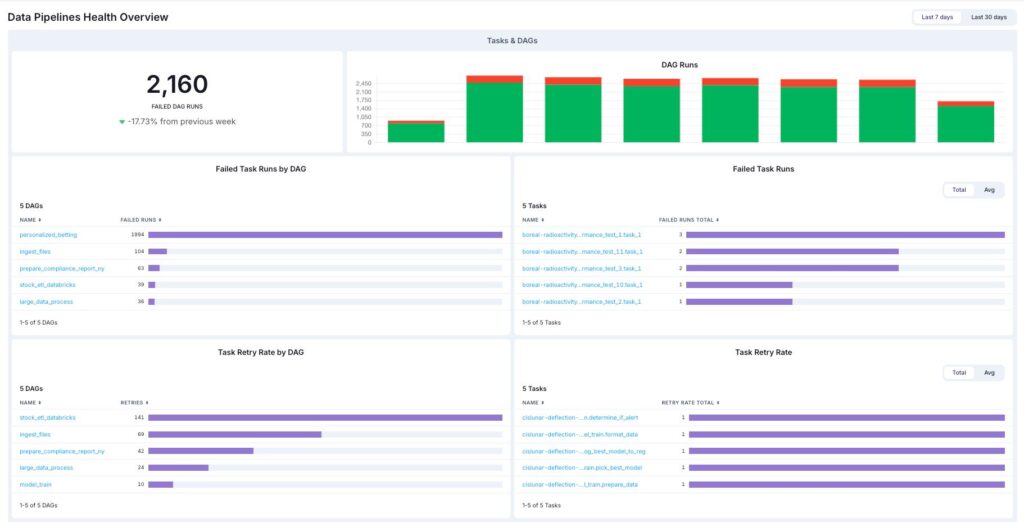
Build Replay Tools
Recovery should not require editing production code.
Provide controlled ways to replay:
- One record.
- One event.
- One file.
- One batch.
- One date range.
Replays should use the same validated processing path.
Avoid special emergency logic that behaves differently from normal production.
Reconcile After Recovery
After a failed pipeline is replayed, confirm:
- No duplicates.
- No missing keys.
- Expected counts.
- Expected amounts.
- Checkpoint correct.
- Downstream refresh complete.
A successful retry message is not enough.
Test Failure Scenarios Deliberately
During development, simulate:
- Crash before write.
- Crash after write but before checkpoint.
- Duplicate event.
- Duplicate file.
- Out-of-order event.
- Partial batch.
- API timeout after successful side effect.
- Warehouse transaction rollback.
- Retry after code deployment.
These tests reveal whether idempotency is real.
Monitor Duplicate Suppression
Track how often the pipeline identifies duplicate work.
A sudden increase may indicate:
- Source retries.
- Webhook problems.
- Checkpoint regression.
- Orchestrator issues.
- Network instability.
Duplicate suppression is both a protection mechanism and an operational signal.

A Practical Idempotency Checklist
Before production, confirm:
- Stable source identity exists.
- Destination merge keys are defined.
- Duplicate source records are handled deterministically.
- Checkpoints advance only after durable processing.
- Overlap/replay is safe.
- Time boundaries are precise.
- Deletes are replay-safe.
- External side effects use idempotency keys or reconciliation.
- Out-of-order events are handled.
- Retry classes are defined.
- Maximum attempts exist.
- Quarantine/dead-letter path exists.
- Replay tooling exists.
- Recovery reconciliation is documented.
- Failure scenarios have been tested.
Frequently Asked Questions
What is an idempotent data pipeline?
It is a pipeline designed so repeating the same logical input does not create unintended duplicate or inconsistent business results.
Why do data pipelines need idempotency?
Because retries are unavoidable. Without idempotency, failures can turn normal retries into duplicate records, double-counted metrics or repeated external actions.
Is MERGE enough to make a pipeline idempotent?
No. Merge logic helps, but stable keys, deterministic source deduplication, checkpoints, deletes, ordering and external side effects must also be designed correctly.
How do you handle duplicate webhooks?
Use the provider’s stable event ID where available, store processed IDs and make downstream processing safe to replay.
How do you make API side effects idempotent?
Use a stable idempotency key when the external API supports it. Otherwise, check the external state or build reconciliation before repeating an uncertain request.
Should a retry re-read previous data?
It can. Overlapping windows are often safer for late or same-timestamp records when destination processing is idempotent.
How do you test idempotency?
Process the same input multiple times, simulate failures at different points and verify that final business state remains correct without duplicates or lost updates.
Conclusion
Reliable pipelines are not designed to avoid every failure.
They are designed to recover from failure safely.
Use stable identities, deterministic transformations, safe merges, careful checkpoints and replayable processing.
Treat external side effects separately.
Test crashes at uncomfortable points.
Then reconcile after recovery.
When retrying is routine rather than frightening, the pipeline is much easier to operate.
If your data pipelines are producing duplicates or requiring manual cleanup after failures, Actiknow can help redesign ingestion and transformation flows for safe retry, replay and reconciliation. Discuss your data engineering requirements with Actiknow.